The net that was
killing the sea,
worn at the throat.
a jewellery line braided from ghost nets — the abandoned fishing gear that keeps catching long after the boat has gone. pulled out of the water off karachi, designed with Muhammad Waqar J Khan, braided by the wives of the fishermen it was ruining, sold back to the city that threw it away.
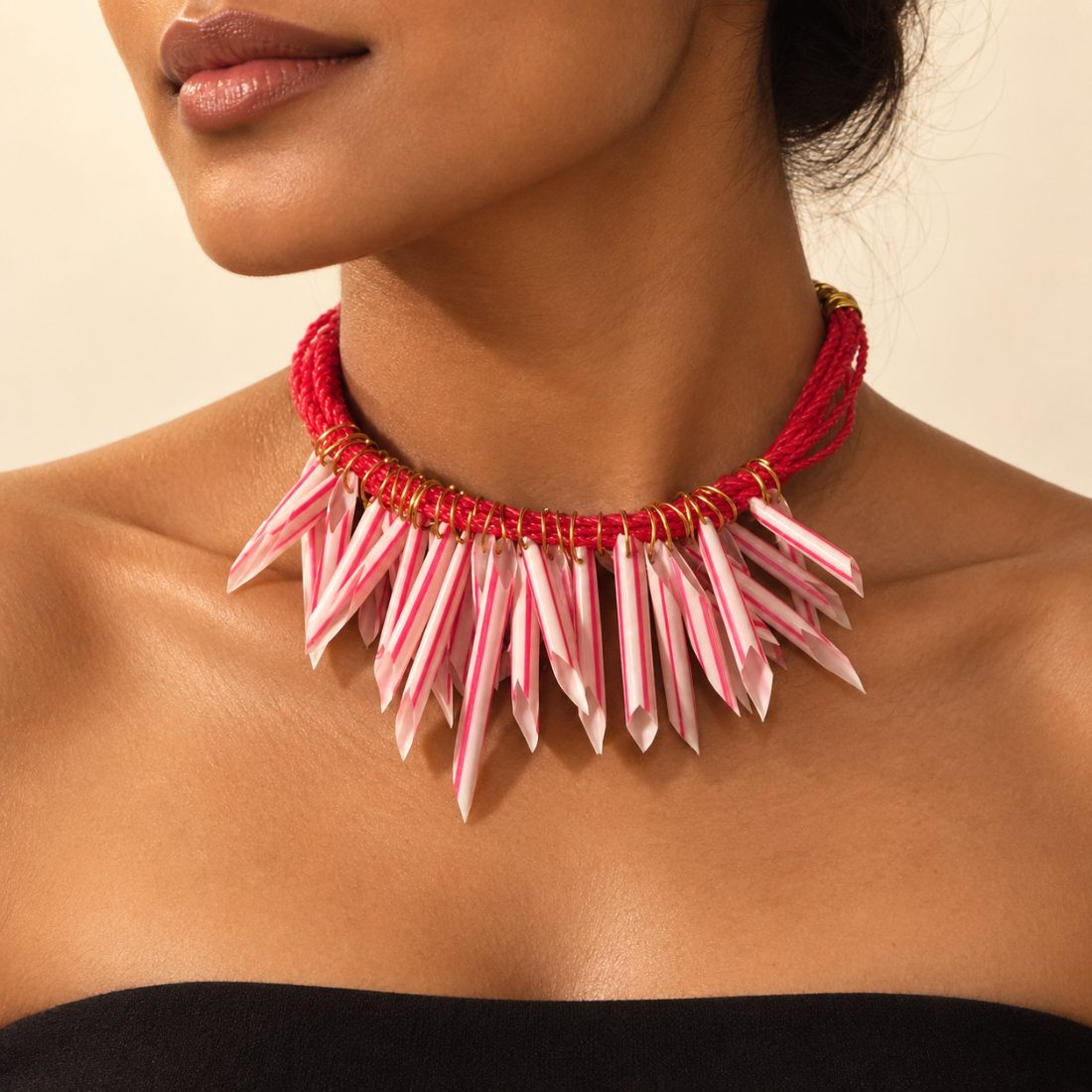
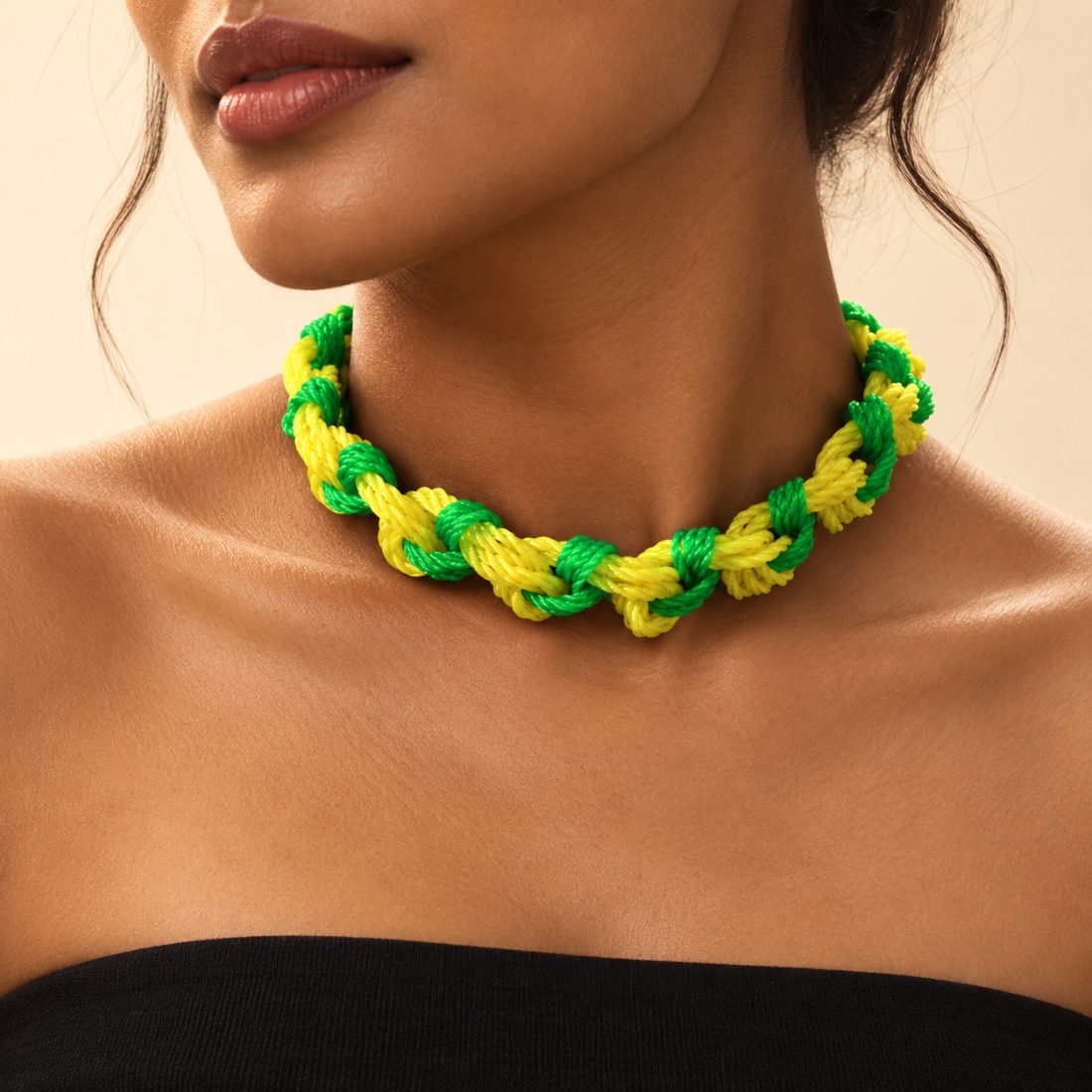
every year an estimated 640,000 tonnes of fishing gear is lost or dumped at sea. nylon and polypropylene net takes centuries to break down. until then it drifts, and it fishes — turtles, dolphins, the catch a boat needed. we cut it out of the water, washed it, and braided it.
Time is running out.
Not for plastic.
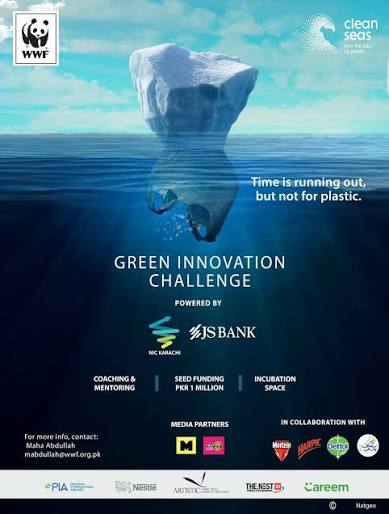
WWF-Pakistan’s Green Innovation Challenge ran under the UN Environment Clean Seas campaign, looking for ideas that would take plastic out of the country’s water. Powered by NIC Karachi and JS Bank: Ghost Nets made the top ten.
each piece is one net. the colour is whatever the sea gave back that week — trawl twine, monofilament, seine rope — finished with scrap wire, a bead, a straw. no two the same, because no two nets were.
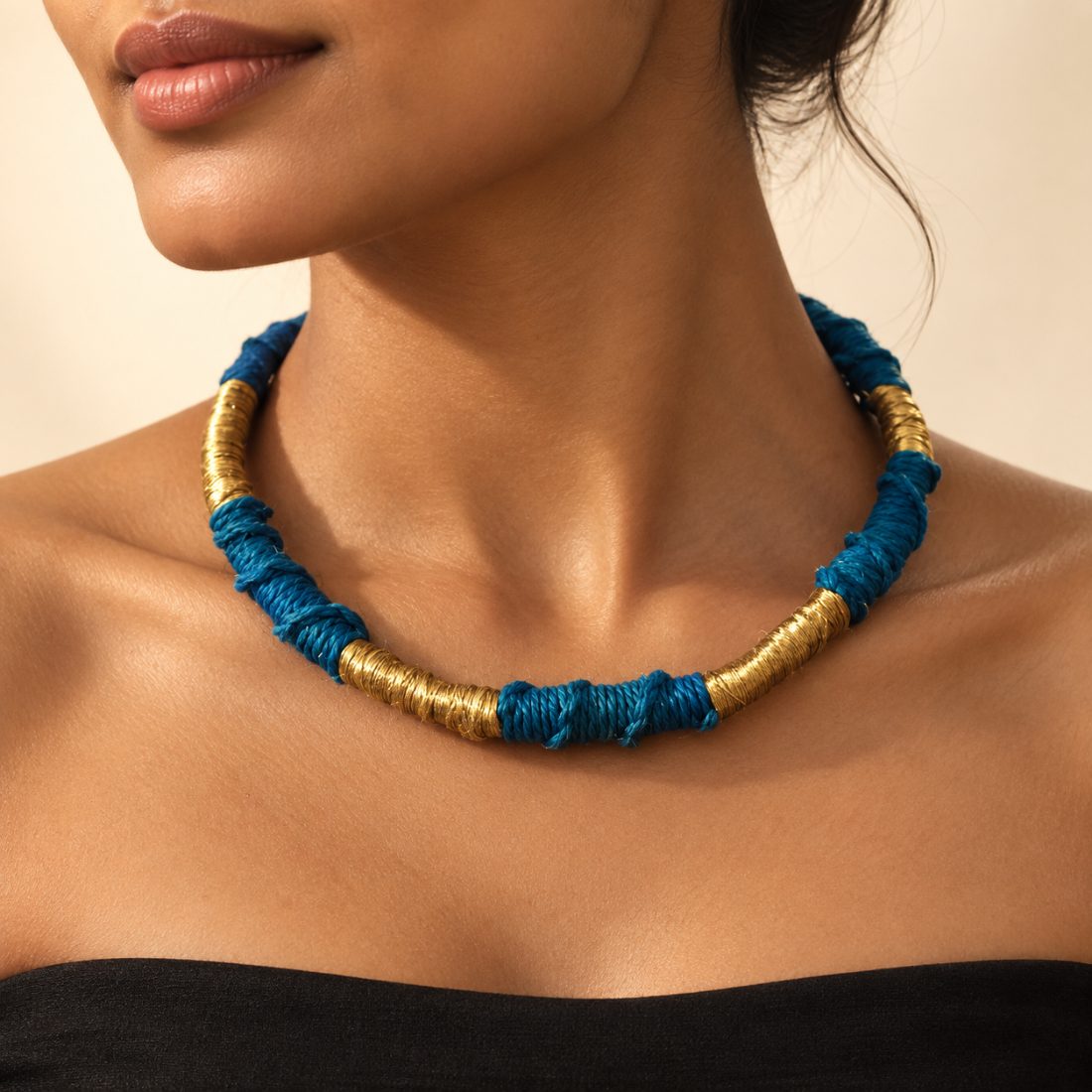
indigo net cord and brass wire wrapped in alternating bands over a salvaged steel hoop.
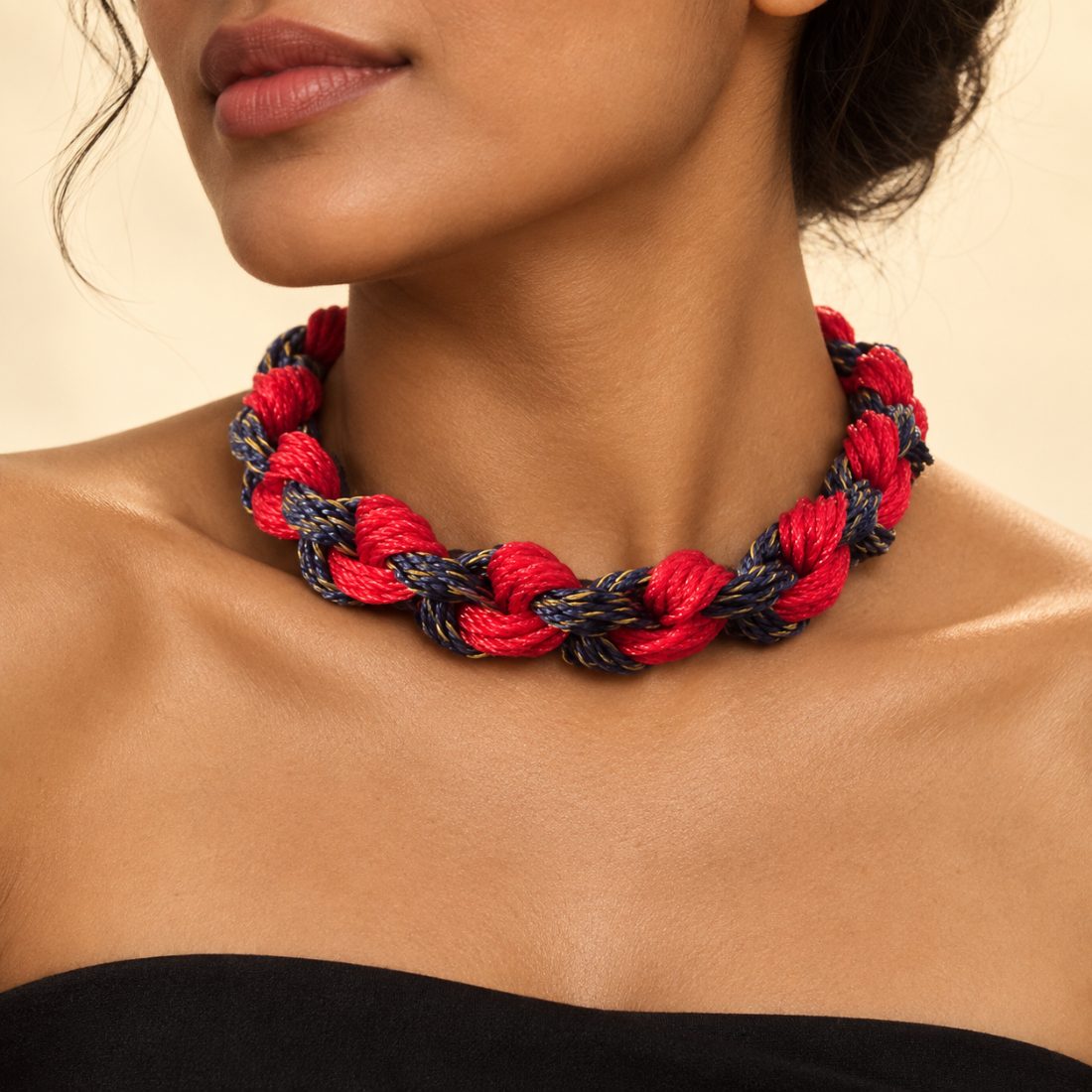
crimson and navy net twine in a chain braid, gold thread pulled from a torn seine.
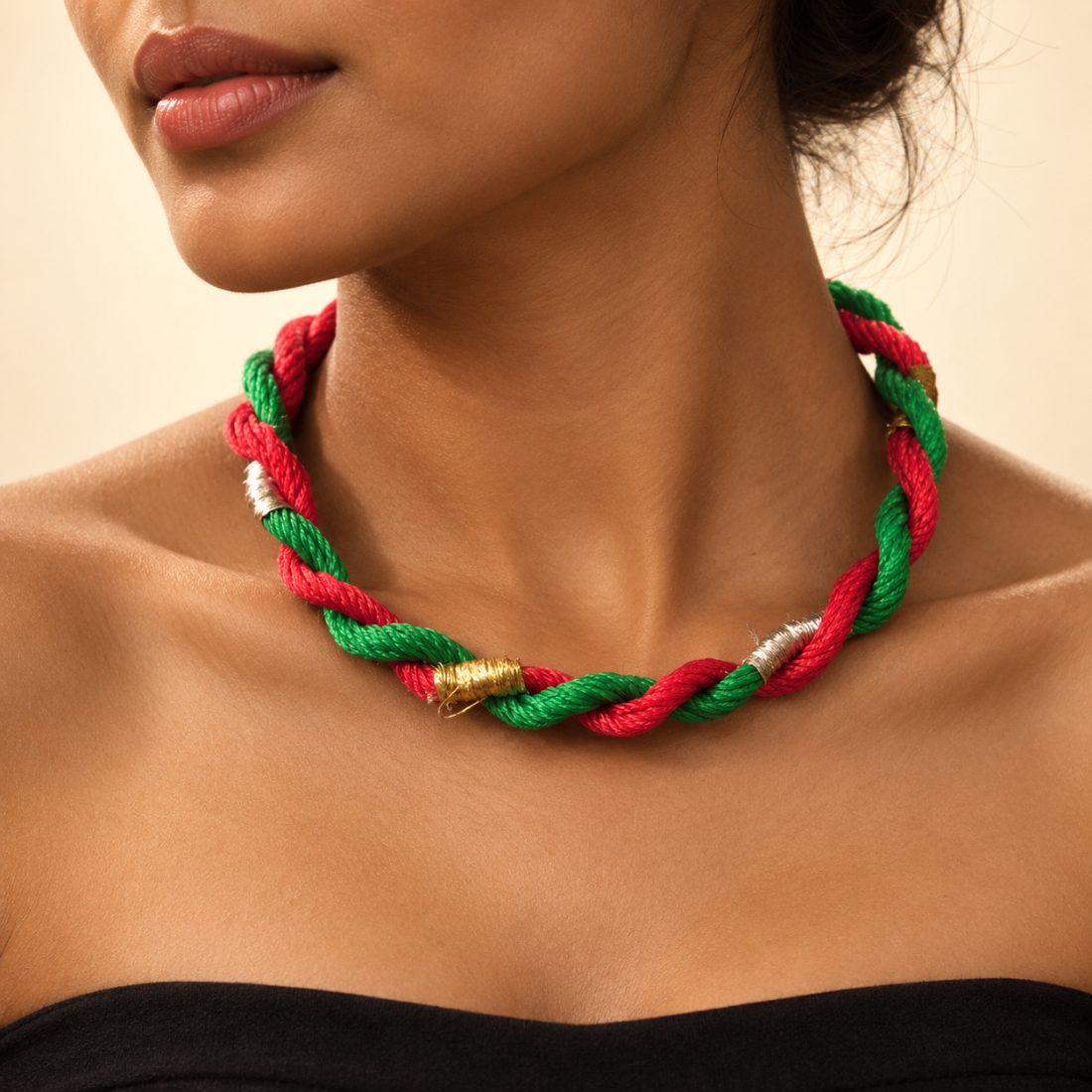
red and green net rope twisted, bound with scrap copper and silver wire.
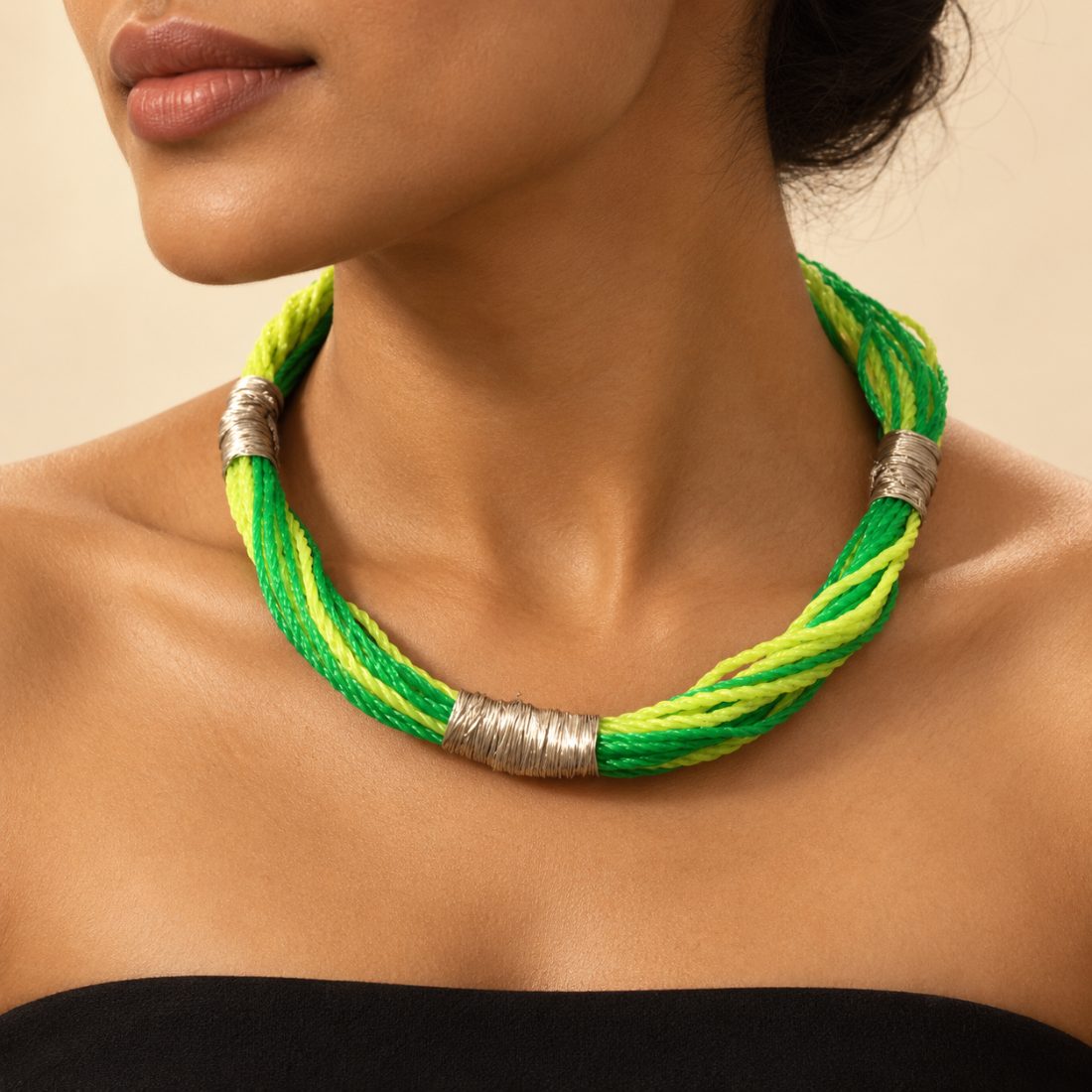
a bundle of lime monofilament, held by three bands of silver-plated wire.
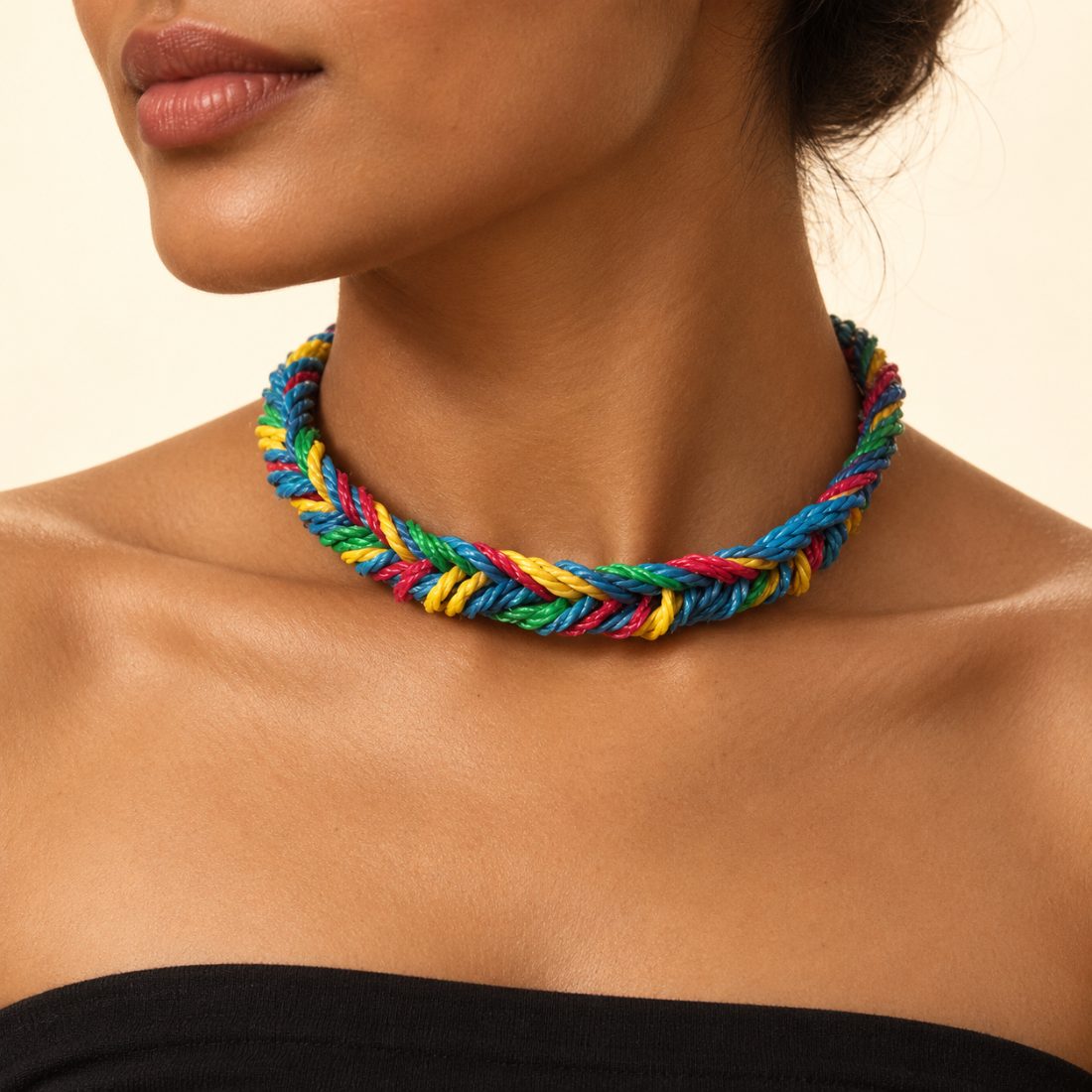
four colours of trawl twine in a single rope twist.
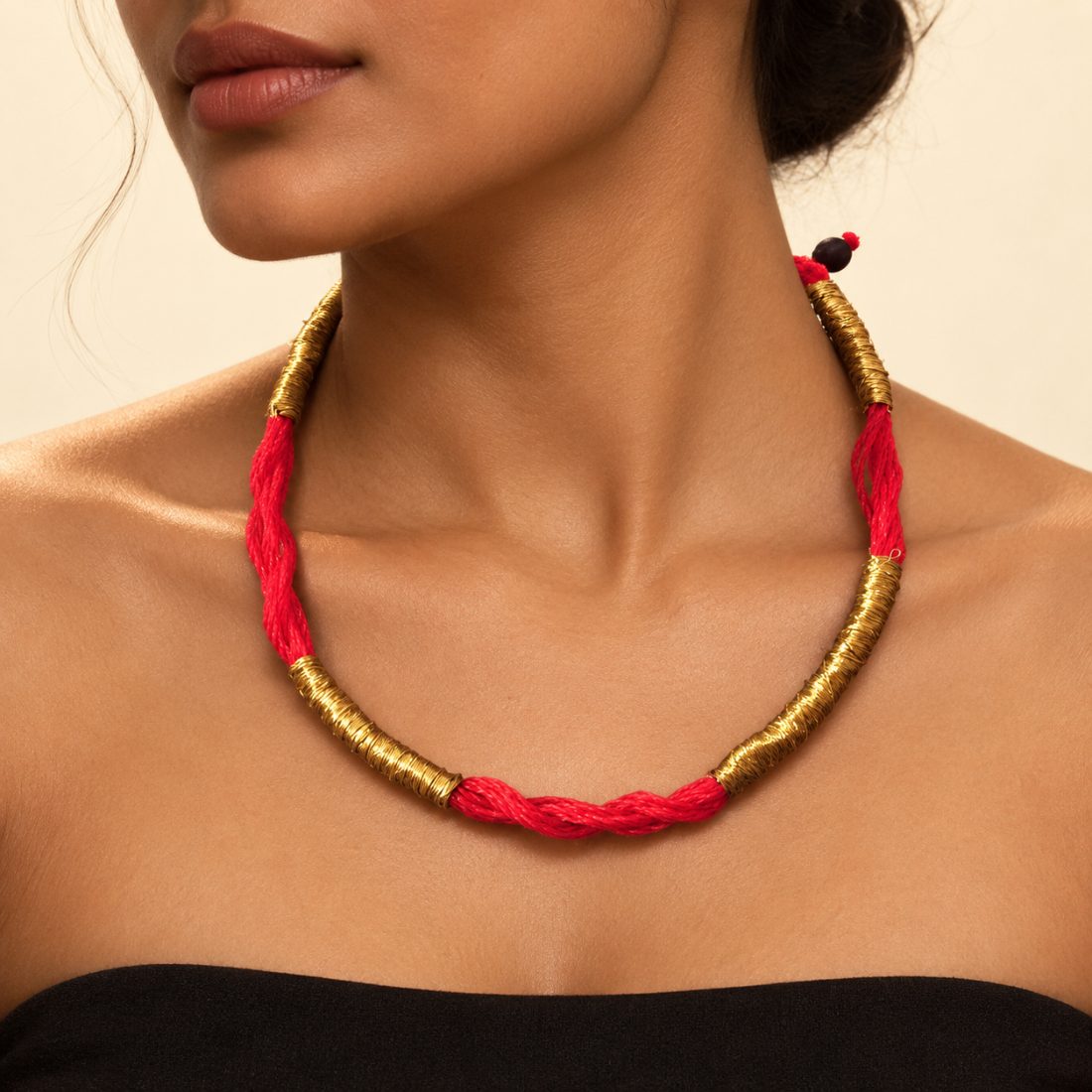
red monofilament twist, brass-wrapped sections, one wooden bead for a clasp.
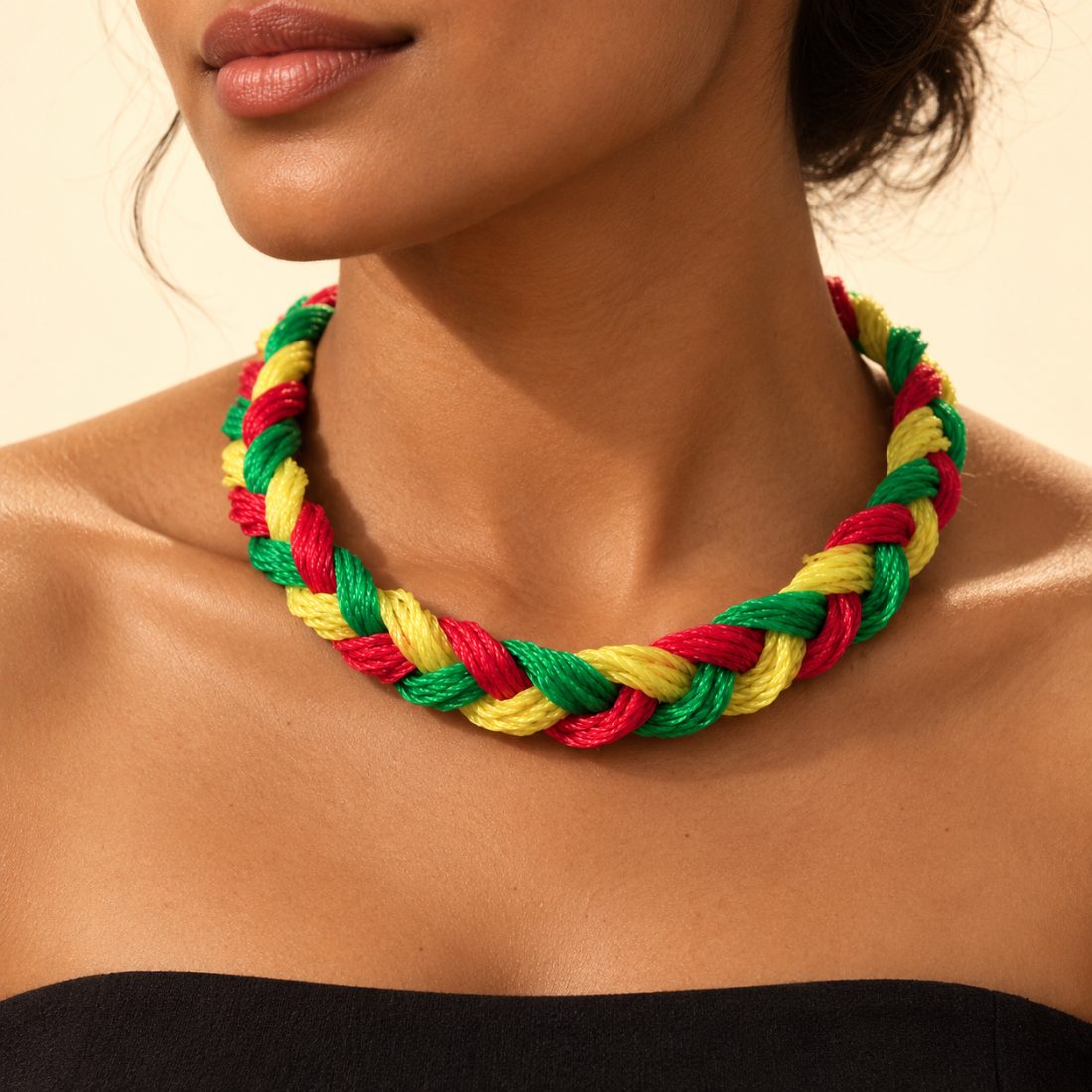
red, yellow and green net twine, three-strand braid.
red net rope collar, washed-up drinking straws cut to a point, brass jump rings.
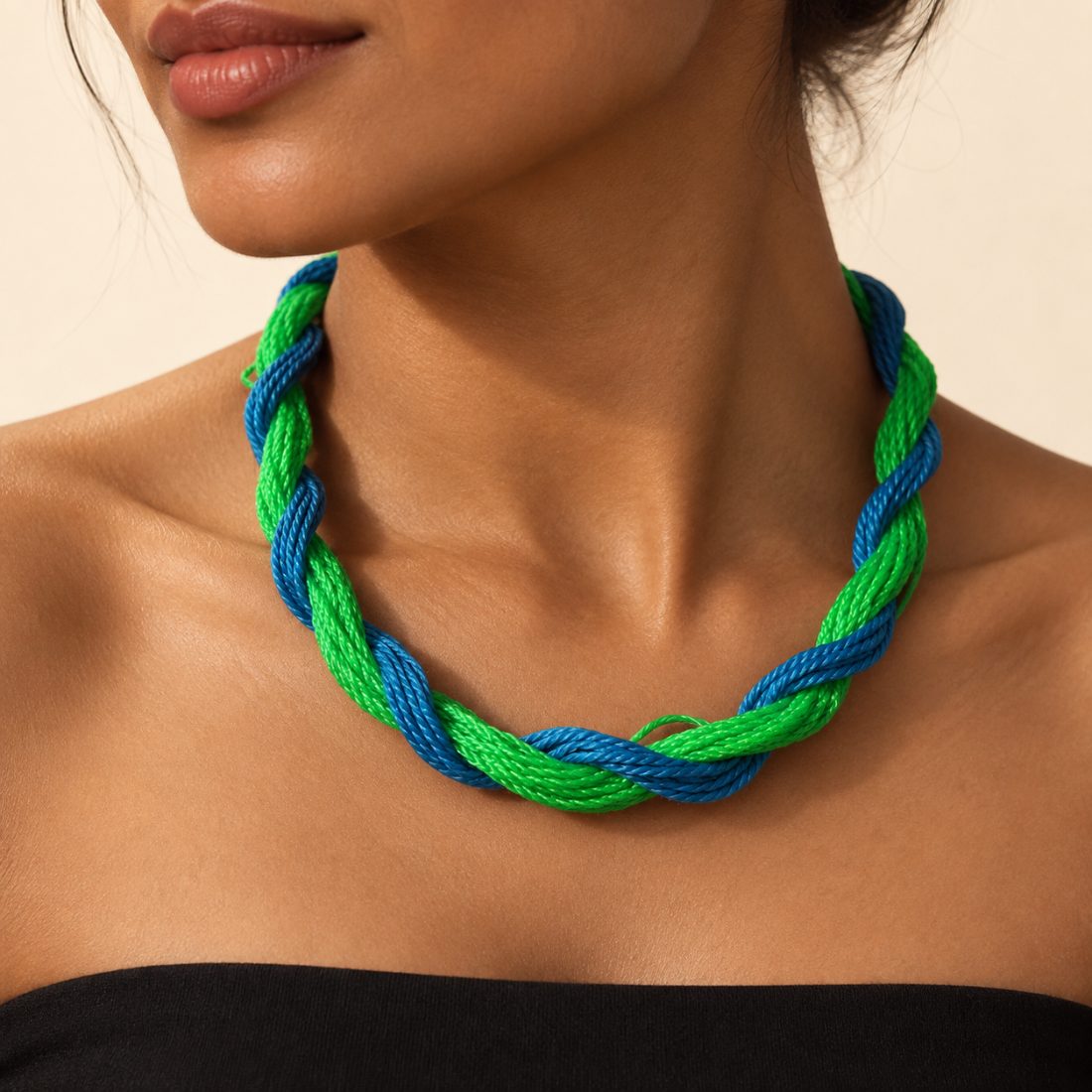
cobalt and green net twine, two-strand twist.
lemon and lime twine in a chunky knot braid.
Two of us, and the wives of the boats.
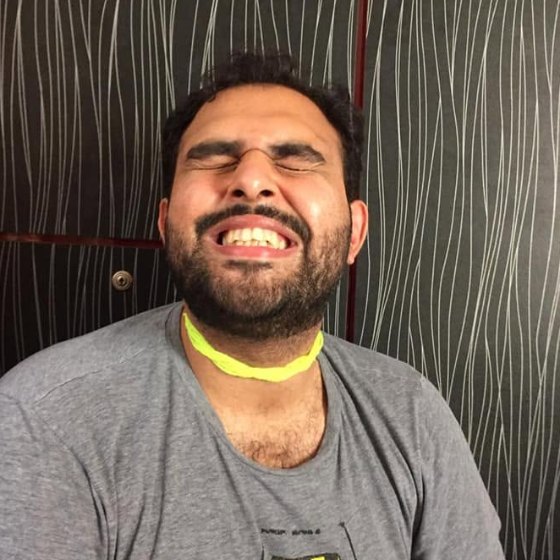
sustainable fashion designer, trained at University of the Arts London. merges indigenous craft with a modern eye — shown at Neonyt Berlin, Trade Caravan Dushanbe, Dubai, Munich. the hands and the pattern-sense behind every braid here. he went on to lead the Olive Ridley Project’s ghost-gear circular economy in Pakistan, turning retrieved net into bracelets, necklaces and dog leashes at scale.
the idea that the net was the material, the pitch that took us into the WWF top ten, and the deal with the village: we bring the net and a table, you bring the braiding you already know, price per piece paid the same day.
the wives of the fishermen in a village on karachi’s coast. the men bring in less every year and ghost gear is one reason. the thing stealing the family’s catch became the thing the family sold.
- → WWF-Pakistan Green Innovation Challenge — top ten, 2018
- → The DO — award for the project
- → incubated at NIC Karachi · The Nest I/O