A few hours into my conversation with the architect Zain Mustafa — about his educational tours to Makli, Ranikot and Mohenjo-daro; the nine abandoned pets he has happily adopted; and his plan to redesign the Karachi Zoo to save its “mentally disturbed” animals — I’m convinced he’d be a fitter leader for this country than a hundred per cent of the men currently doing it.
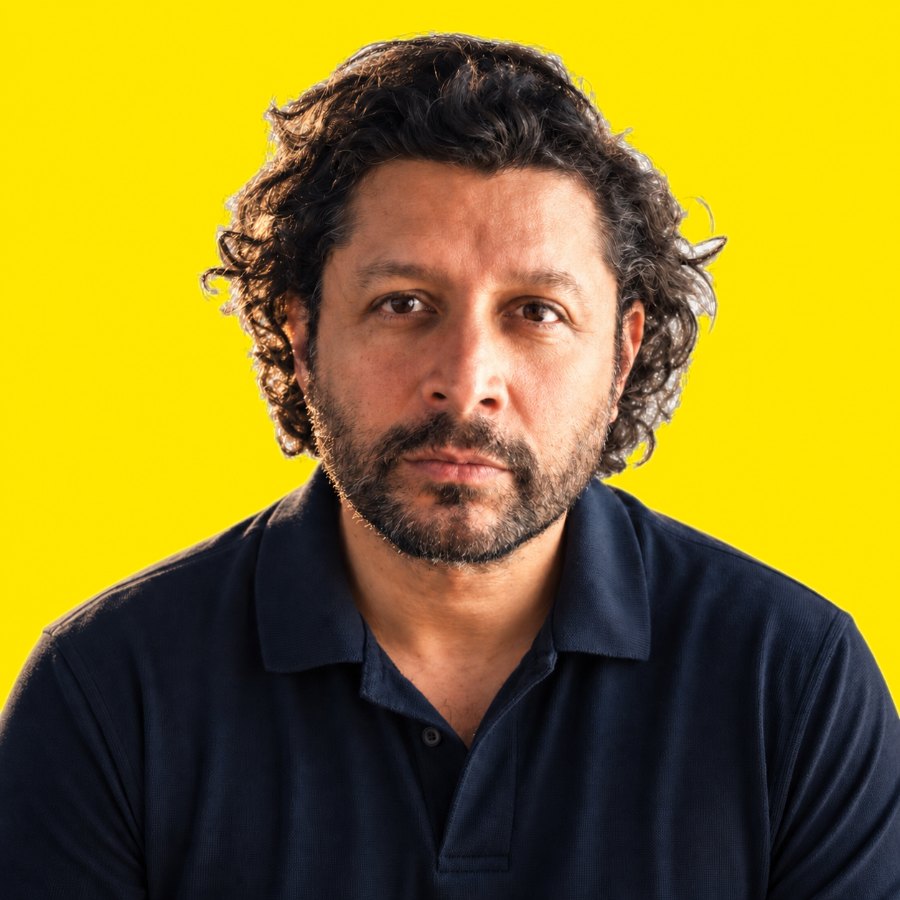
I’ve been in contact with Zain twice before. The first time he had just finished designing Tao, a popular pan-Asian restaurant in Karachi. The second, he had just lost one of his childhood friends, Sabeen Mahmud of The Second Floor, to a cold-blooded murder. Both times the disloyal Pakistani in me wondered why a person of his abilities was so committed to staying in Karachi, and the patriot in me was glad he was here despite the losses, struggles and frustrations of the city.
When I say abilities: he went to one of the best boarding schools in the UK, did his undergraduate degree at Parsons School of Design in New York, and was headhunted by Columbia for a full scholarship to study and teach. If I named the celebrity homes, hotels and restaurants he has designed in the last ten years it would eat my word count. He also runs an architectural education project in Karachi called Cube Education.
Still, six years after moving back, I’m not sure he has acclimatised. He turns up early for the interview. My working day as a writer has just started at 3 pm; his is ending, because he’s up at six every morning to walk his dogs. At a bright coffee shop with more sunlight than pretension, I ask him how he is reviving culture in his own particular way.
The zoo. The Karachi Zoo was built in 1878. Its gardens are in good condition. Its animals are not. “It’s still a Victorian-style zoo where animals are kept in small cages. Times have changed, humanity has evolved, zoos worldwide are being shut down or becoming animal-centric. Some of the animals, especially the ones in smaller enclosures, have developed psychological issues. You don’t need to be a scientist to know the behaviour they exhibit isn’t normal.”
Why not shut it down? “The logistics are extremely complicated. These animals have assimilated to this setup. Before we send them to a sanctuary they need to be rehabilitated first. Who bears that cost?” So he took it as a design crisis: save what exists, make it liveable. Eight architects are working on the master plan, with Berlin, San Diego and Singapore as precedents, the Horticulture Society of Pakistan marking heritage trees, and the Born Free Foundation on call. There is no MOU. No one is being paid. “Everyone is working on this purely for the love of the city and the animals.”
The plan pushes the enclosures back so people can’t throw paan and chip packets at the animals, gives them trees to climb, and brings the monkeys — currently living in isolation — into one space. Under the veneer of saving animals, he says, they’re trying to build “an empathetic, humanity-based culture, which is part of our faith. We want to leave a trail for the completely self-obsessed millennials of today.”
And if the government drops the plan? “It will set the pace for a future generation. You have to go as far as they will let you go. Because what other choice do we have?”
The nights he presents at the zoo, he can’t sleep afterwards; he can hear the animals. At his last presentation the administration and the media stood with him, his back to the small cage of a large, expressive chimpanzee named Raju. Raju had just been given water, and started spitting it at them. It fell on the master plan. Everyone told Zain to move. “I kept saying, let him spit on us. This is why we are here. He’s not a happy fellow. He needs to get used to us and we need to get used to them. You can’t walk away because a little water will ruin your outfit.”
The tours. When he started teaching at the Indus Valley School, he found his students didn’t have the fundamentals — didn’t know, and weren’t proud of, Pakistan’s pre-1947 history. So he started taking them there: Thatta, Makli, Ranikot, Mohenjo-daro, with the Sindh Tourism Board handling logistics and security. The night before, a briefing on the politics of urban design. On site, a pop-up classroom with a whiteboard and an easel, and guidebooks and fold-out maps Cube made itself because none existed. Schoolchildren have gone, and university students, and ambassadors, and retired ladies. “You don’t need an architectural background. Everyone who goes has a thirst for knowledge.”
The point is pride. “The average Pakistani is mocked globally and we’re branded as chauvinistic terrorist pigs. The kids today are informed of everything else but have no knowledge of their grassroots. I want their references to change. Instead of looking at Ranikot and saying ‘Sir, this looks like the Great Wall of China,’ I’d rather they say ‘the Great Wall of China looks like Ranikot.’”
His own conversion happened in 2010, when a friend doing documentation at Makli took him along. “That trip blew my mind.” Makli: four hundred years of architectural history on a strip of land four kilometres long, falling apart. “It made me livid.” He started working with the Endowment Fund Trust, and one thing led to another. He resists being called an expert — the senior people are out there, working in isolated pockets, and the public never hears from them. “That conduit, that bridging of the gap, is what I try to do.”
Is it safe? “When you leave the city, wandering around is safer than being in Karachi. The people there are very warm. They like that people from the city are visiting. They often feel forgotten.” He adds: “If there’s a robber sitting in Ranikot, I’d really like to talk about his business plan, because it’s a failed model.”
Sabeen. Her death, he says, was a huge hit. “She represented the last vestige of culture in the city. Whether it was the revival of qawwali or truck art, Sabeen gave so many people their start.” In the months before her assassination they met for coffee in Islamabad; she was protesting the Lal Masjid issue, and in an argument she said to him: “Mujhay sarak pe nikalna parta hay kiyun ke tumharay jaisay nahi nikaltay.” I have to come out on the street because people like you don’t. He laughed it off. It hit home. When she told him she’d received death threats, he said: don’t do it, we need you alive.
“When she was assassinated, it made me come out and get involved in work I wouldn’t have done normally. Her words kept ringing in my mind. When she was alive, the rest of us sat back and thought, Sabeen is doing it. Now we have to do it. I’ve sat back and been passive for far too long.”
Staying. He still holds a Pakistani passport and will only go where he’s welcomed — Sri Lanka, mostly, because there’s no visa queue. His best year in America was not New York, which he left when it lost its grit, but Santa Fe, where he lived near the mountains, worked on a contracting crew building houses, and learned the cello.
On the brain drain: “It’s sad to see talented people leave due to political assassinations, fear-mongering or lack of economic stability. But I’m genuinely happy to be here despite my frustrations. I don’t want to go anywhere. This is the hottest address in town. And I am not solo — there are more people like me, and we are not prisoners. We have chosen to stay here.”