Five people who had a way out and didn’t take it. Written by someone who did.
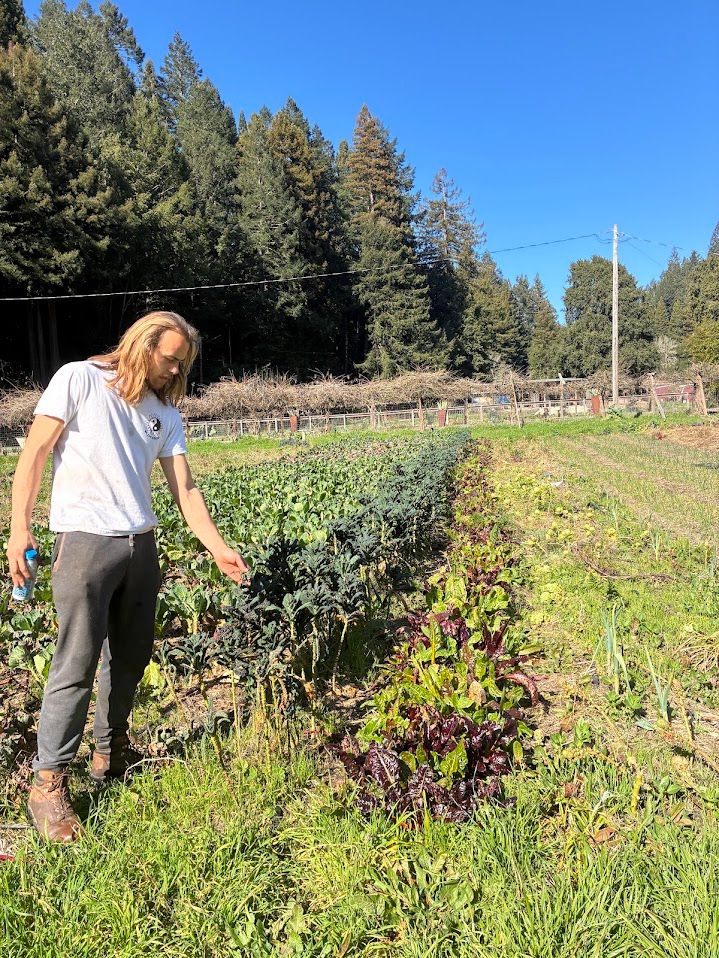
a civil engineering degree from northwestern. he aerates by hand so the worms live.
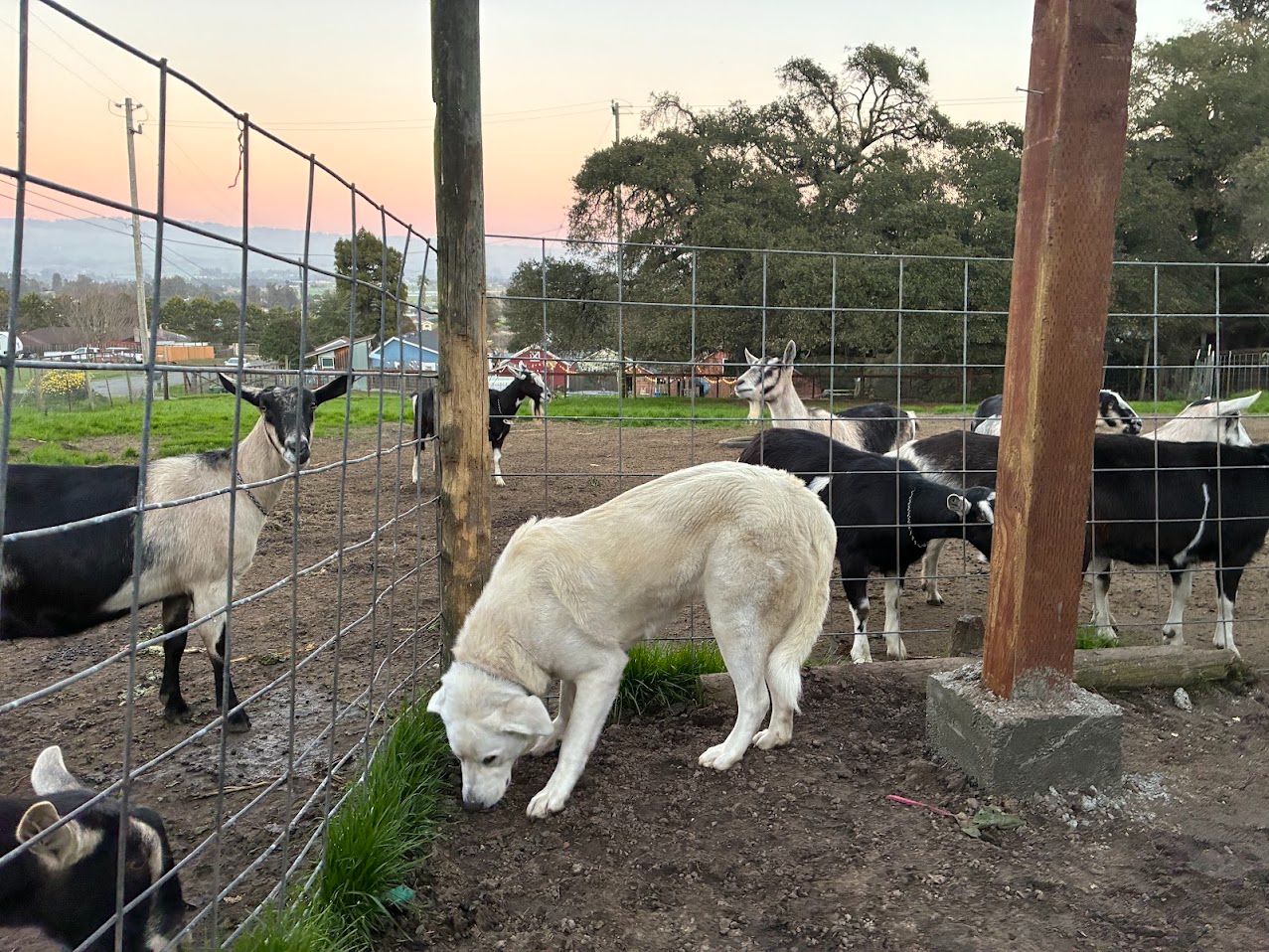
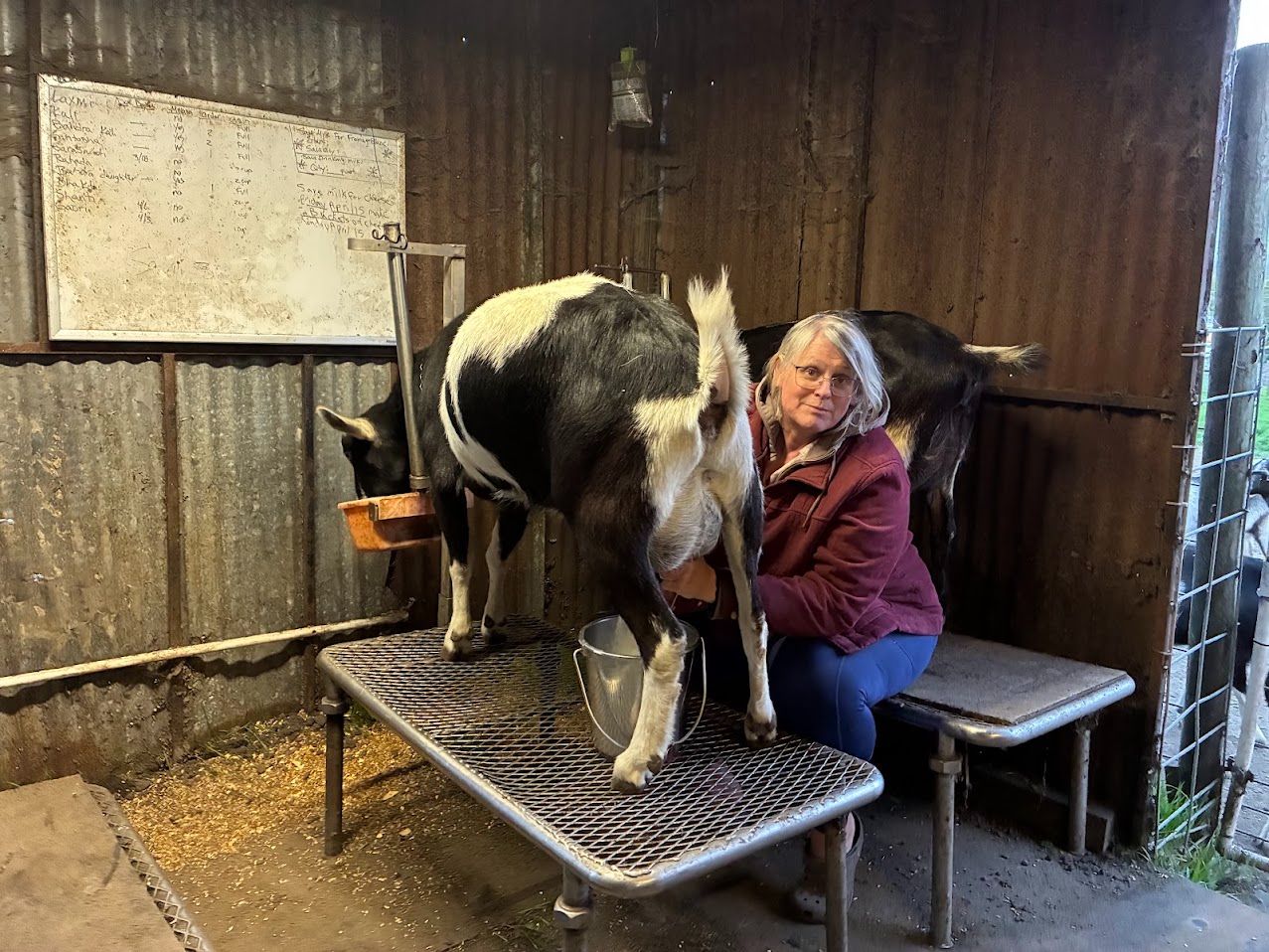
her body is failing on schedule. thirty-three acres are not for sale.
everyone filmed the police chief who died. she ran to the slum the same blast tore open.
trained at parsons and columbia. came home to design a better cage.
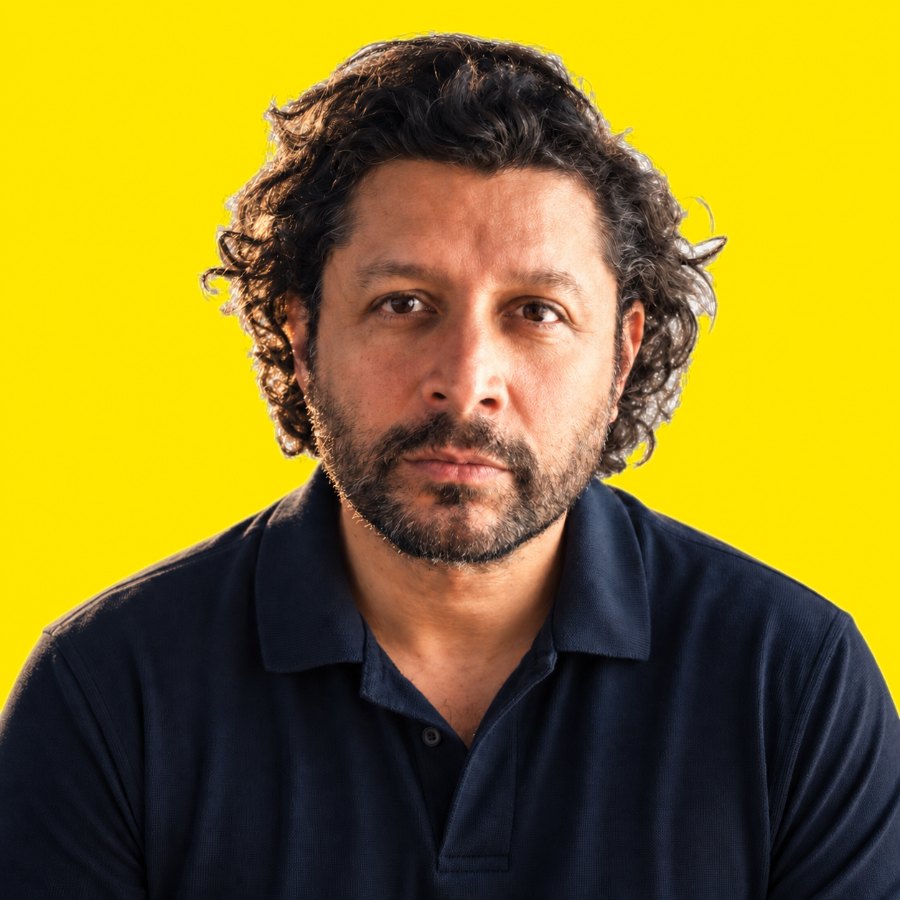
eighty percent of pakistan’s medical students are women. its female neurosurgeons fit on one hand.

No childhood rows of corn. No inherited land. No grandpa in overalls with a loyal farm dog named Dusty.
Cameron learned farming the way most people learn things now: late-night YouTube, a small patch of dirt, and the kind of hobby that starts as “this is cute” and quietly turns into “oh… farming’s like my whole personality now.” That kind of accidental obsession feels at home in this part of Sonoma County, which is probably why the drive to meet him makes so much sense.
To get there you pass through Guerneville, a town that feels mid-transition, where the majestic and the messy share a sidewalk. First the deep shade of Armstrong Redwoods, the forest that first convinced me I could actually live here. Then the town: thrift stores, rainbow flags, old river motels, and people who look like they arrived last week or never left. Hippies, wanderers, locals and the unhoused blur together in a way that is complicated and oddly honest. Some people come here to find freedom. Others drift and stay because the river makes leaving feel optional.
I stop at Coffee Bazaar, the small place beside the bookstore where everything is slow on purpose — people reading, quiet conversations, nobody pushing you out the door. No one is dressed for a casting call, no one is pitching a screenplay mid-latte, and no barista is glaring at my outfit while explaining an aggressively overpriced coffee. A few minutes downriver, Northern California gets even more Northern California: there is a skate park in the middle of the redwoods, next to Lightwave Café. At some point a group of adults approved this plan. My Pakistani parents would be deeply confused.
Somewhere along this stretch of river, a young farmer is building a life from scratch. I first noticed 26-year-old Cameron Lilly through my climate action networks, and then at his farmers’ market stall in Santa Rosa, where he stood behind his produce with a bucket of wildflower bouquets he’d grown himself.
We meet in the afternoon on a bright, clean day, the kind of California winter day that feels like you got away with something. The beds are narrow and long, lined up like sentences; tarps cover sections like punctuation. My dog Luka circles the rows, verifying the dirt is real and standing by to assist with any gophers considering a move.
Cameron moves through his kale and chard with the calm of someone who knows exactly what everything costs — money, time, joints, weather, worry.
“I never studied it formally,” he tells me, almost apologetically. “I got into it late in high school. Started a garden. And the more I grew, the more I was like — oh. This is really cool.” He’s from the northwest suburbs of Chicago. His parents met at Northwestern, and he followed them there, for a degree in civil engineering. “So you can’t grow year-round out there,” I say, my immigrant brain still learning what seasons mean. He laughs. “You can grow more than people think. But yeah — it’s a lot less than here.”
The engineer is still there, under the mud-caked boots. He talks about the farm as infrastructure. Standard engineering treats rainwater as a waste product to be piped away as fast as possible; he uses cover crops and zero-till to turn the soil into a sponge. “Better soil equals better infiltration.” He won’t use heavy machinery because of what lives under the surface. He aerates the beds by hand with a broadfork, a heavy, honest metal tool. “When you pull it up there are tons and tons of worms. If you go in with mechanised stuff, you’re chopping them off.”
He doesn’t own the land. He farms someone else’s property under an arrangement that is both pragmatic and quietly radical: he keeps the place maintained and beautiful, and in exchange he gets to grow and sell. He and his girlfriend run it together, sunrise-to-sunset summers, harvest-season exhaustion. It is deliberately not big. He works the middle space between a backyard and industrial agriculture, and he doesn’t intend to scale out of it.
He narrates the crops — arugula, beets, mustard greens, turnips, radishes — and then stops at the flowers. He fell for them in college working for a rose grower, for the varieties the public never sees and the whole seed-to-vase process. “I love making bouquets.” They’re high-value and they pull people to the stall; this year he’s expanding into weddings.
Listening to him, I feel the familiar ache of wanting this life. I want the thrifted hat and the hands dyed with beet juice. I want to say “the soil is tired this year” and have people take me seriously. And the fear is there too — the joints, the financial tightrope, the unknown, and the strong possibility that my version of farming would involve more time asking ChatGPT about the politics of agriculture than touching soil.
To keep the farm going, Cameron spends his evenings in the kitchen at Saucy Mama’s Jook Joint in Guerneville — not as a poetic farm-to-table journey, but because farmers need steady money and winter still exists. Saucy Mama’s is the opposite of quiet farm life: a small soul-food place run by a family with deep Louisiana roots, where everyone gets called “honey” and the ribs and catfish and cornbread waffles keep flying out. Working there has sharpened how he thinks about food, labour, and what we choose to pay for.
He doesn’t moralise, but he is clear about the cost of convenience. The good deal at the store, the dollar item, hides a history of somebody’s labour. “Where we spend our money is sometimes more important than who we vote for.” Every easy click on Amazon, he thinks, hands more power to the systems that extract. “It’s easy, it’s fast. But at what cost?”
Eventually, the blueprint takes him home. Water and land prices make California a beautiful temporary office; the plan is to buy affordable land back near Chicago, where the support networks already exist. His parents are supportive because they can see the passion, with a lingering parental pragmatism: his mom still suggests he work as an engineer for a few years to save up for the farm. Cameron intends to make the farming pay for the farm.
For now he’s here, in the mud, proving you don’t need a corporate title to own your own time.
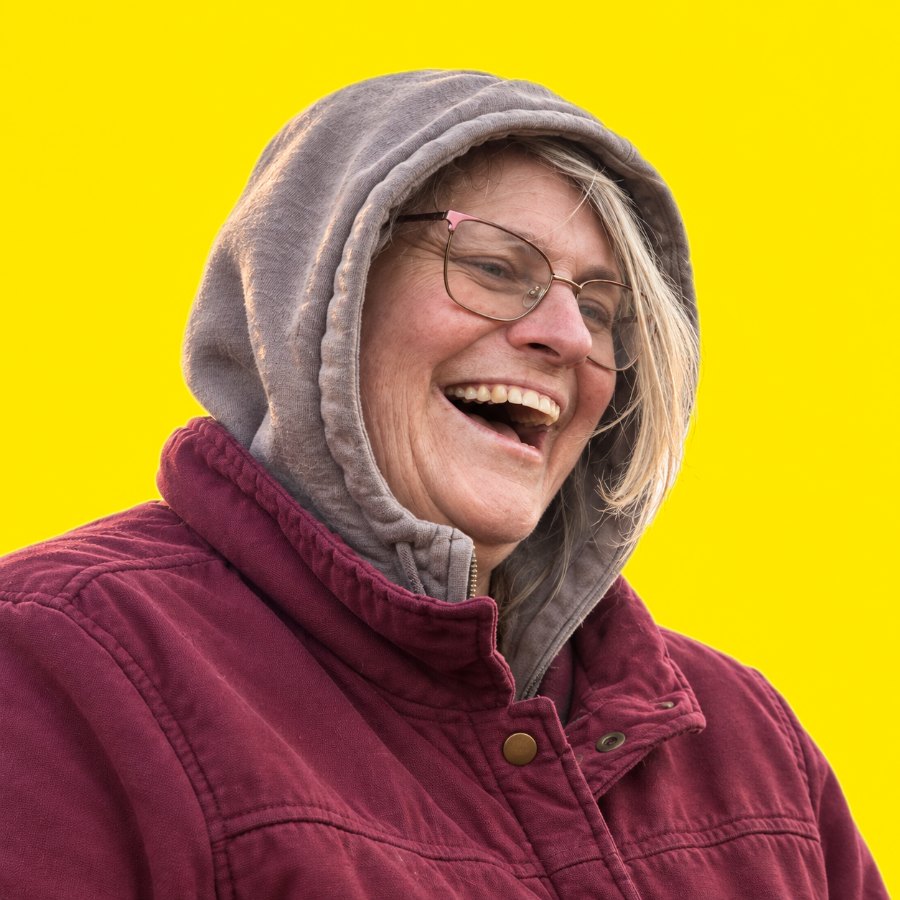
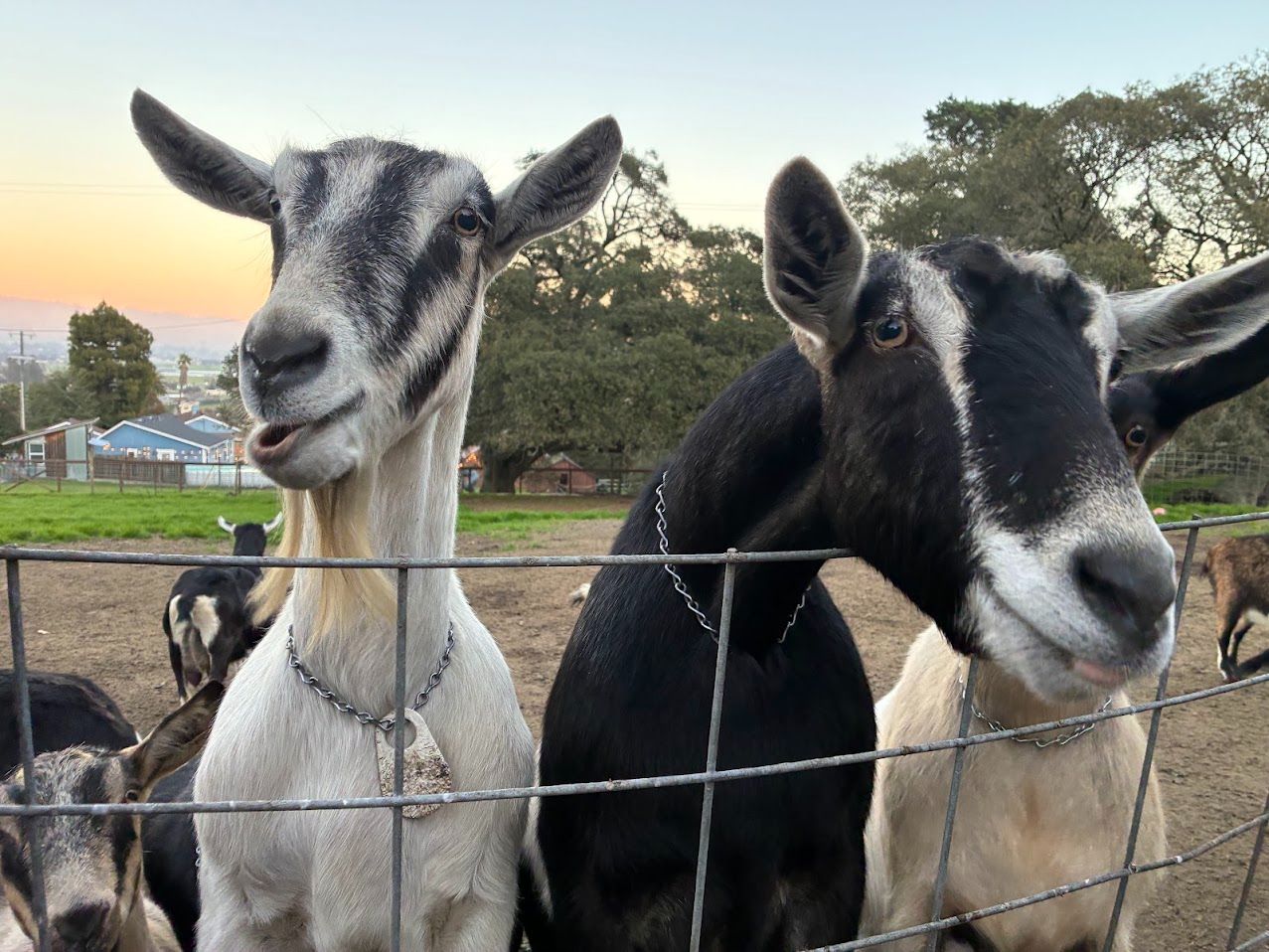
I usually meet Mangala at the edges of the day, as the sun starts to bleed orange and pink over the Petaluma hills. We sit in her old RV, a cramped vessel that feels less like a home than a lifeboat. From the bed, her cat Prana — nearly seventeen, radiating a quiet, ancient judgment — stares at me without blinking.
She tells me the cat’s name first. “If your energy is sweet, they’ll come say hi.”
From the cabinets she brings out photos of a past life: her wedding, where she looks larger than life, draped in finery, beside a husband who looks like he owns the world. She looks like a different woman in those frames — polished, contained.
The woman across from me now, in a worn purple jacket and Crocs, is raw. And she is in pain.
“I’m a wild mustang,” she tells me, her voice steady. “You can’t break my spirit.”
Her body has tried. Mangala lives with lupus, and it is written on her. She speaks without vanity about the hair that fell out, the seventy pounds from prednisone, and the five bad discs in her back that grind with every step on the hard pasture ground.
“I live in pain levels seven to ten,” she says, matter-of-fact. “Meditation brings it to three or four. Otherwise I couldn’t cope with this planet.”
This is why she wakes before the sun to meditate. It isn’t a lifestyle choice. It’s anaesthesia. Then she throws her head back and laughs — a huge, uninhibited sound, the laugh of a twelve-year-old girl, and it shakes the small RV.


If I’m honest, I listen to her and I’m scared. Scared because I’m getting too inspired. Scared of joining her in this vision and losing myself in it.
I have never raised a goat. My hands are soft; they belong to a keyboard, not a milking stand. But when I step out of the RV and into the pasture, into the smell of alfalfa and earth, I’m not in California any more. I’m in Bahawalpur. I’m a child in the summer heat, knee-deep in the feed my grandmother mixed for her animals. I am thousands of miles and decades from that place, and Mangala’s land collapses the distance. She brings me home.
To understand her you have to understand the ground she stands on. The ranch has been in her family since about 1915. “My grandfather was a livestock dealer,” she says. “These houses are 150 years old. All tongue-and-groove.”
She gestures at the hills beyond the fence and her face tightens. “Petaluma wasn’t always boutiques and brunch. This was dairy and eggs — the capital of the world. We had chicken houses everywhere. We fed people.”
The egg capital is becoming luxury housing, and the farmers are being pushed out. For Mangala this isn’t nostalgia. It’s survival. “You can put houses anywhere,” she says, her voice cutting through the evening. “You can’t grow food anywhere. People want barns for aesthetics. But here, animals go in when they want. Farming is not a hobby. It’s a relationship.”
“Think what milk should cost,” she warns. Pave the pasture and we lose the ability to feed ourselves.
Relationship over extraction is how she runs the herd. In an industry that treats animals as machines, her goats live twice the usual span. “Why stress them with pregnancies every year if I don’t need to?” Everything here has a Sanskrit name. Durga, after the warrior goddess, stands guard. Vishnu is a massive buck she calls “a big puppy in a goat suit.” There is Shanti, peace, and Bhakti, devotion.
“People think farmers are rich,” she says, leaning her head against Durga. “They’re not. They do it because they love it.”
Her plan is fully costed and unsentimental: a commercial dairy making artisanal goat cheese — the paneer she already makes, soft and rich, which we eat with the chawal her son cooks; marigolds for Indian weddings; a commercial kitchen to feed the homeless; barn apartments where volunteers can live with dignity. At the centre of it is what she calls Good Karma — a place for survivors of domestic violence and children with autism, two groups she knows have a particular connection with animals. “Women are going to heal this planet,” she tells me. “If there’s any hope, it’s women.”
She keeps telling me to listen to her Baba, the teacher from the Sonoma Ashram whose sermons play in the background of her life. “Peace is the most valuable thing in the world. Without it, you can lose everything.” I try to listen to Baba. He doesn’t bring me the calm her goats do.
For her the land isn’t a chore. It’s the meditation. “This keeps me honest.”
The volunteers who come — students from Sonoma State, locals who show up just to be near this — shovel compost, fix fences, milk the herd. They come because they want a future that has this in it: animals, spirit, kindness.
I sit in the RV eating her homemade pumpkin pie, and I worry. About her health. About the For Sale signs that could go up any day. I want to save Mangala. I want to save this farm from drifting off like the coastal fog. I want her body to heal so she can lead the sermons she dreams of, in a temple built on this land.

But I can’t build the temple. The only thing I can do is write about her dream — the wild mustang of Kuck Lane — in the hope that someone else sees what I see: a place where the land heals the people, and the people, in turn, heal the land.
I spent three days with Shahla Mahmood on a media trip to Gwadar organised by the Karachi Union of Journalists. Equipped with one cameraman, she shot multiple story packages before the rest of us had unpacked. She interviewed the port’s directors and decision-makers, jumped into a moving boat to film Gwadar Port from the water, and sat with the local fishermen for a story on what the port was doing to their livelihoods.
She is SAMAA TV’s reporting weapon, with seven years on the streets of Karachi for some of the biggest channels in Pakistan — Dunya, News One, CNBC — covering target killings and bomb blasts. She is the first journalist in her family. She sees herself as bureau chief of a major channel within five years.
“I knew I was in love with reporting when I could spend half my day studying mass communications and the other half interning at the Women Media Center with absolutely no stipend,” she says. “Nothing about the job dampened my spirits.”
Private channels were multiplying then. “The training I received at the Women Media Center landed me my first position at News One in 2009. There were hardly any female reporters at the time, and I pushed myself to cover human rights and women’s stories.”
At News One she found a mentor in the senior journalist Javed Chaudhry, and one story that changed everything. “I met the family of a one-year-old child living in deplorable conditions who had a hole in his heart. They needed to operate immediately and had no money. I remember hiding my tears while reporting that story.” Within two days of it airing, the family had raised enough to fly the child abroad for treatment. “I realised early on that I could use reporting to help people tell their stories, and that feeling was indescribable.”
Within a week, Dunya News offered her a job at triple the salary and double the benefits. There, too, there weren’t enough women on the field or in the newsroom; the ones who came in became anchors.
Then, driving home late one night, she had an accident on Shahrah-e-Faisal. “I thought I’d lose my life.” She came out with a broken leg and some time off. “My father has been really supportive, but at that time even he told me I should reconsider my line of work. But meeting new people, being on the streets, telling a new story every day — that was my passion.”
With the leg still broken, she arrived at SAMAA for an interview and was hired on the spot. At SAMAA she found more women reporters, more women editors, and her first female mentor, Faryal Arif, now the channel’s first female bureau chief. “I mentor young girls in the field exactly the way Faryal supported me.”
A fellowship took her to Washington and Texas to train with American channels. “It was great learning in the US. But I realised Pakistani journalists are reporting much tougher stories.”
What she brings to those stories is the angle nobody else takes. “I remember covering the death of SSP Chaudhry Aslam, who died in a bomb explosion on the Lyari Expressway. While everyone was covering the high-profile death, I saw a slum nearby that had been hit by the shrapnel and the families were severely wounded. I ran in my heels towards them and brought their stories forward so they could get help too.”
She can’t imagine leaving reporting. “I want to take up a leadership role like bureau chief, but I like reporting too much to let it go. I don’t see myself reporting international stories, because I want to report what’s going on in Pakistan. Our stories are important. They need to be told, and I hope to be the one to always tell them.”
It would be superficial to say that 45-year-old architect Zain Mustafa looks fitter than ninety-nine per cent of the twenty-five-year-old men I know. But a few hours into our conversation — about his educational tours to Makli, Ranikot and Mohenjo-daro; the nine abandoned pets he has happily adopted; and his plan to redesign the Karachi Zoo to save its “mentally disturbed” animals — I’m convinced he’d be a fitter leader for this country than a hundred per cent of the men currently doing it.
I’ve been in contact with Zain twice before. The first time he had just finished designing Tao, a popular pan-Asian restaurant in Karachi. The second, he had just lost one of his childhood friends, Sabeen Mahmud of The Second Floor, to a cold-blooded murder. Both times the disloyal Pakistani in me wondered why a person of his abilities was so committed to staying in Karachi, and the patriot in me was glad he was here despite the losses, struggles and frustrations of the city.
When I say abilities: he went to one of the best boarding schools in the UK, did his undergraduate degree at Parsons School of Design in New York, and was headhunted by Columbia for a full scholarship to study and teach. If I named the celebrity homes, hotels and restaurants he has designed in the last ten years it would eat my word count. He also runs an architectural education project in Karachi called Cube Education.
Still, six years after moving back, I’m not sure he has acclimatised. He turns up early for the interview. My working day as a writer has just started at 3 pm; his is ending, because he’s up at six every morning to walk his dogs. At a bright coffee shop with more sunlight than pretension, I ask him how he is reviving culture in his own particular way.
The zoo. The Karachi Zoo was built in 1878. Its gardens are in good condition. Its animals are not. “It’s still a Victorian-style zoo where animals are kept in small cages. Times have changed, humanity has evolved, zoos worldwide are being shut down or becoming animal-centric. Some of the animals, especially the ones in smaller enclosures, have developed psychological issues. You don’t need to be a scientist to know the behaviour they exhibit isn’t normal.”
Why not shut it down? “The logistics are extremely complicated. These animals have assimilated to this setup. Before we send them to a sanctuary they need to be rehabilitated first. Who bears that cost?” So he took it as a design crisis: save what exists, make it liveable. Eight architects are working on the master plan, with Berlin, San Diego and Singapore as precedents, the Horticulture Society of Pakistan marking heritage trees, and the Born Free Foundation on call. There is no MOU. No one is being paid. “Everyone is working on this purely for the love of the city and the animals.”
The plan pushes the enclosures back so people can’t throw paan and chip packets at the animals, gives them trees to climb, and brings the monkeys — currently living in isolation — into one space. Under the veneer of saving animals, he says, they’re trying to build “an empathetic, humanity-based culture, which is part of our faith. We want to leave a trail for the completely self-obsessed millennials of today.”
And if the government drops the plan? “It will set the pace for a future generation. You have to go as far as they will let you go. Because what other choice do we have?”
The nights he presents at the zoo, he can’t sleep afterwards; he can hear the animals. At his last presentation the administration and the media stood with him, his back to the small cage of a large, expressive chimpanzee named Raju. Raju had just been given water, and started spitting it at them. It fell on the master plan. Everyone told Zain to move. “I kept saying, let him spit on us. This is why we are here. He’s not a happy fellow. He needs to get used to us and we need to get used to them. You can’t walk away because a little water will ruin your outfit.”
The tours. When he started teaching at the Indus Valley School, he found his students didn’t have the fundamentals — didn’t know, and weren’t proud of, Pakistan’s pre-1947 history. So he started taking them there: Thatta, Makli, Ranikot, Mohenjo-daro, with the Sindh Tourism Board handling logistics and security. The night before, a briefing on the politics of urban design. On site, a pop-up classroom with a whiteboard and an easel, and guidebooks and fold-out maps Cube made itself because none existed. Schoolchildren have gone, and university students, and ambassadors, and retired ladies. “You don’t need an architectural background. Everyone who goes has a thirst for knowledge.”
The point is pride. “The average Pakistani is mocked globally and we’re branded as chauvinistic terrorist pigs. The kids today are informed of everything else but have no knowledge of their grassroots. I want their references to change. Instead of looking at Ranikot and saying ‘Sir, this looks like the Great Wall of China,’ I’d rather they say ‘the Great Wall of China looks like Ranikot.’”
His own conversion happened in 2010, when a friend doing documentation at Makli took him along. “That trip blew my mind.” Makli: four hundred years of architectural history on a strip of land four kilometres long, falling apart. “It made me livid.” He started working with the Endowment Fund Trust, and one thing led to another. He resists being called an expert — the senior people are out there, working in isolated pockets, and the public never hears from them. “That conduit, that bridging of the gap, is what I try to do.”
Is it safe? “When you leave the city, wandering around is safer than being in Karachi. The people there are very warm. They like that people from the city are visiting. They often feel forgotten.” He adds: “If there’s a robber sitting in Ranikot, I’d really like to talk about his business plan, because it’s a failed model.”
Sabeen. Her death, he says, was a huge hit. “She represented the last vestige of culture in the city. Whether it was the revival of qawwali or truck art, Sabeen gave so many people their start.” In the months before her assassination they met for coffee in Islamabad; she was protesting the Lal Masjid issue, and in an argument she said to him: “Mujhay sarak pe nikalna parta hay kiyun ke tumharay jaisay nahi nikaltay.” I have to come out on the street because people like you don’t. He laughed it off. It hit home. When she told him she’d received death threats, he said: don’t do it, we need you alive.
“When she was assassinated, it made me come out and get involved in work I wouldn’t have done normally. Her words kept ringing in my mind. When she was alive, the rest of us sat back and thought, Sabeen is doing it. Now we have to do it. I’ve sat back and been passive for far too long.”
Staying. He has tattoos from the nineties, and covers them now when he travels, because of the harassment. He still holds a Pakistani passport and will only go where he’s welcomed — Sri Lanka, mostly, because there’s no visa queue. His best year in America was not New York, which he left when it lost its grit, but Santa Fe, where he lived near the mountains, worked on a contracting crew building houses, and learned the cello.
On the brain drain: “It’s sad to see talented people leave due to political assassinations, fear-mongering or lack of economic stability. But I’m genuinely happy to be here despite my frustrations. I don’t want to go anywhere. This is the hottest address in town. And I am not solo — there are more people like me, and we are not prisoners. We have chosen to stay here.”
She quotes The Beatles, loves the opera, and has mastered God’s most intricate and creative machinery – the human brain.
Aneela Darbar is currently the only US-trained female neurosurgeon in Pakistan. She specializes in minimally invasive endoscopic surgery, and was Assistant Professor of Neurosurgery at St. Louis University Hospital in Missouri before returning to Karachi four years ago.
Her day begins at 5 am on her bike, cycling through the streets of Karachi, then an hour of meditation, and ends at Aga Khan University Hospital, where she practises, teaches, and is currently mentoring four young Pakistani women into neurosurgery.
Neurosurgery has an unbelievably small number of women in it, especially women of colour. In 2011, women made up seven per cent of board-certified neurosurgeons in the United States. The number hasn’t moved much since.
Aneela calls neurosurgery “a white man’s club” — one she crashed despite being told it was impossible by medical peers at home and abroad. The gatecrashing took years of studying, researching, practising, personal sacrifice and plain hard work.
“I still hear the phrase ‘kia aurat se surgery kerain gay?’ from some shocked patients and their families here,” she laughs. Will a woman do the surgery? Patients are comfortable being operated on by a bald, serious-looking fifty-year-old man in spectacles. When Aneela walks in, they find it hard to take her seriously. “I am a woman; I love handbags, wearing makeup and pretty clothes. I will not change into a man just to be taken seriously.”
“I tell women who want to enter this field that they should be rightfully scared. This is by far one of the most emotionally and physically taxing occupations in the world.” Twelve to fourteen hours standing in surgery would tax anyone. What she finds hardest is being made into a god. “The pendulum swings for us daily. We go from Gods to nothing in a matter of seconds. We have no space to falter.”
As a child, while other girls played with Barbies, Aneela built brains out of Play-Doh. There were no doctors in her family, no neurosurgeons, no television shows to put the idea there. It is a random thing to find in a little Pakistani girl’s head, and she never let it go. “I burnt all my boats to pursue neurosurgery. I kept no other career options for myself.”
Her first encounter with a neurosurgeon was at twenty, when she took her grandmother to one after a stroke. When Aneela said she wanted to become one herself, the old man told her it was impossible. She came home and cried for days. It was the first time anyone had told her to stay inside the role society had prescribed for her.
The person who comforted her was her father, a businessman, who backed her at every step. Her mother had died when she was a child.
She left Pakistan for the United States a year later and spent the next fifteen years turning that impossible around. When she had enough experience, she came back to Karachi and started from scratch. “No one knew me here and I had no patients whatsoever. Doctors in Pakistan are recommended by word of mouth, and I had none to start with.”
Patients weren’t the only thing she had to rebuild. “My old friends from Pakistan were all scattered around the world. Work ethics here were very different from the US. People had no faith in the system, and therefore placed little trust in medical professionals.”
Still, it felt like home. “There’s this undeniable bond with your country, its people and the language. It never dies, and it keeps pulling you back.”
On the rising number of Pakistani women who finish medical school and give up the career for marriage, she is unbothered. “I don’t think education is ever a waste. Those seats are not wasted at all. The female candidates get them through merit, and it is their choice whether they marry or pursue their careers later. They can even pick up the trade years later.”
One fight follows her everywhere. Whenever she points out how discriminatory her profession is towards women, in Pakistan or abroad, she is told she is playing the woman card. “One thing I’ve learnt is to pick my battles wisely, and which ones to let go.”
Her advice for young women in Pakistan is resilience — and one correction of her own. “Build your career around your life and not the other way around. I was often so goal-oriented that I developed tunnel vision.”
In a few weeks she will be in Zanzibar, working with an NGO that treats children with neurological conditions free of charge.
We’re told doctors are supposed to be cold and indifferent. That’s what makes them good at the job, right? Watching Aneela stay honest and open through the whole conversation, I realise the best doctors are probably the ones who, despite the work, keep their hearts wide open — and don’t let those open hearts get the best of them.
“I still cry when I have to relay bad news to a family. I still struggle when we lose a patient,” she says, close to tears, holding her composure to the end.