The Ease Lens
for three years i lived beside someone for whom the world opened like an automatic door. proximity to ease reveals the architecture of the world.
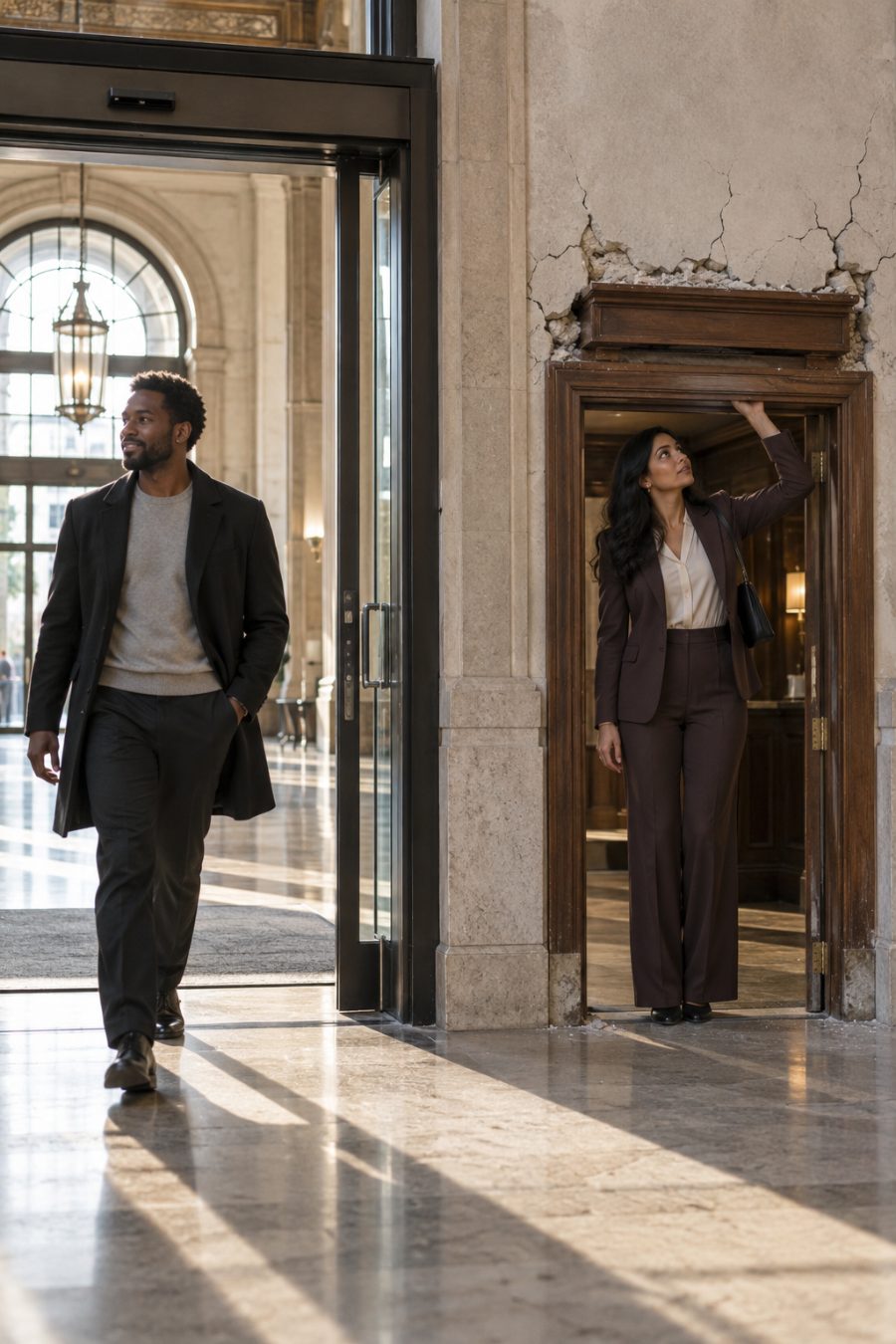
For three years, I lived beside someone for whom the world opened like an automatic door.
Not because he was looking for it. Not because he understood systems. Simply because… ease was the air he breathed.
He wandered through cities without locking doors. Travelled across states without fear. Smiled, and people smiled back. Jobs appeared. Opportunities materialized. Nothing felt dangerous, scarce, or heavy.
It wasn’t privilege he noticed. It was comfort he assumed.
Meanwhile, I came from a world where doors did not open, rooms did not welcome, safety was not a given, my voice had consequences.
I had to shrink myself like Alice in Wonderland, folding into the tiny spaces allowed to me. You learn humility when your survival depends on it.
And then suddenly… I was living in a world built for someone who never had to shrink at all.
This is where the Ease Lens was born. Not because he taught me anything — but because proximity to ease reveals the architecture of the world.
It’s like that scene from They Live — where the main character puts on the glasses and suddenly sees: “OBEY.” “CONSUME.” “THIS IS YOUR PLACE.”
Except when I put on my version of those glasses, I didn’t see aliens. I saw systems.
I saw how some people move through life with a force field of assumed safety, and others move through with a lifelong muscle memory of vigilance. I saw how some lives are built on invisible cushioning and others on invisible labor. I saw how ease can be so normal to someone that they don’t even register the world bending for them — while I spent years bending myself just to pass through.
Here’s the funny part: my humility didn’t disappear. But the fear did.
Because once you’ve lived in a world where rooms don’t open, and then briefly lived in one where they do — you learn to enter rooms with a strange new power: the power of someone who knows how small she once had to make herself, and how large she is capable of becoming.
The Ease Lens didn’t make me like him. It made me see like myself, but with X-ray vision.
It taught me what was illusion, what was access, what was inherited ease, and what was hard-earned truth.
It helped me outgrow the tiny boxes I once folded myself into — not with magic mushrooms but with the slow, steady medicine of awareness. Like Alice eating the cake that makes her grow too tall for the room.
The difference now? I no longer apologize for outgrowing spaces that were never designed to hold me. I no longer apologize for saying things that make the room temperature uncomfortable.
And I’m done playing chess in rooms where the players were cheating the whole time.