Who Drew The Lines
a maid in a santa monica hallway. modern slavery dressed up as polite exchanges and paychecks, wrapped in the illusion of choice.
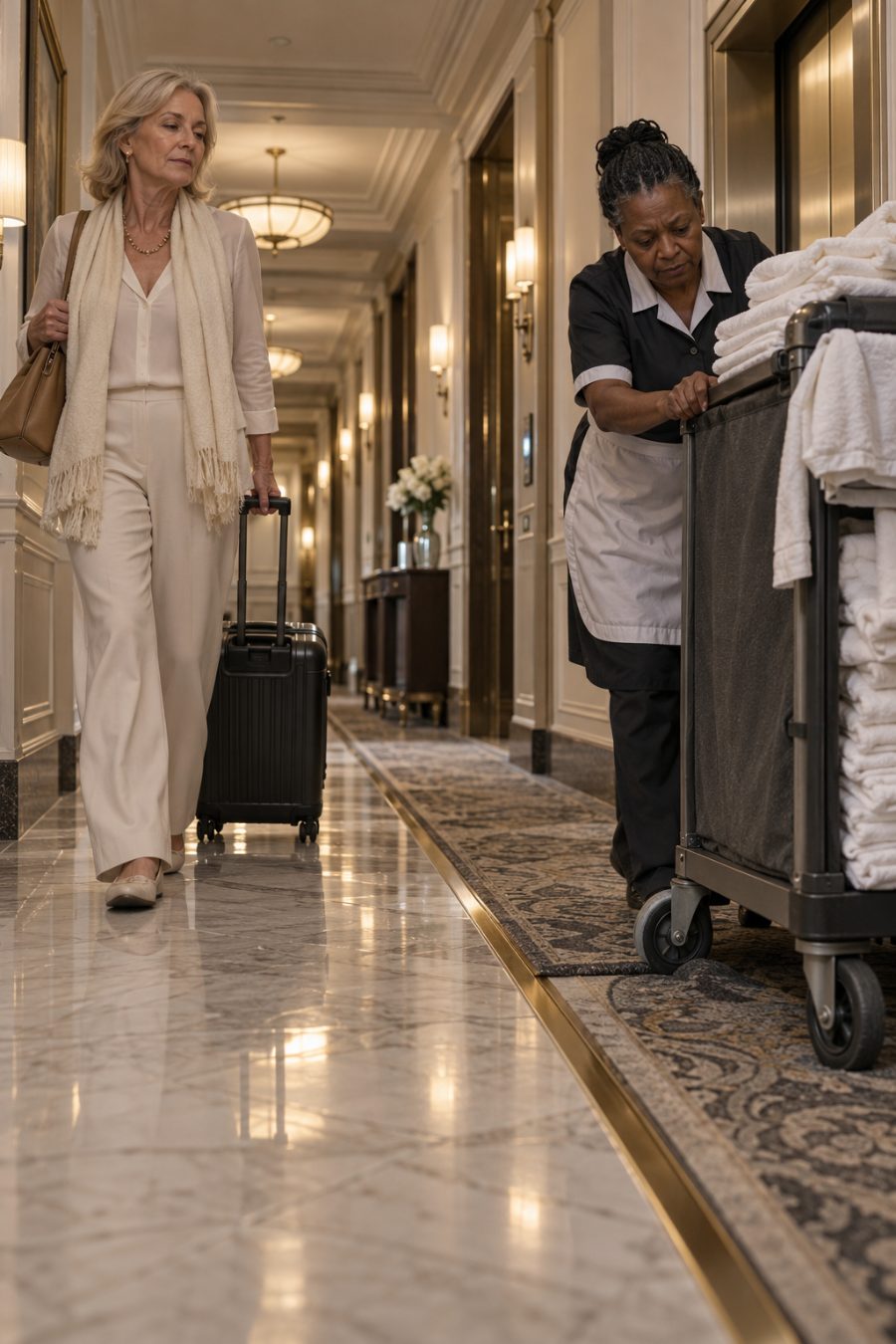
I’m rolling my suitcase out the door, and curiously peering at all the other hotel rooms. Just to see how other people are living? Everything is crisp, clean, polished — like a perfect illusion.
I definitely couldn’t have afforded this room. And L.A. has a strange way of reminding you of all the wealth around you. I walk down the hallway and see an older Black woman coming out of one of the rooms, dressed in a black-and-white maid’s uniform.
She looks like someone’s grandmother — heavyset, slow-moving, her aura worn down from labor. Following her is a well-dressed, older white woman, adjusting her scarf.
“I’ll be sure to do that, ma’am,” the maid says, her words soft but rehearsed, as if she’s said them a thousand times. There’s nothing rude about the exchange, but something about it makes me feel uncomfortable. Like being transported back.
An era when racial hierarchies were rigid and normalized. Of course, slavery was abolished in 1865, but decades later, segregation and economic oppression took over. By the 1950s, Black Americans were legally “free” but still subjected to systemic racism, forced into low-wage roles, and barred from upward mobility.
And here we are, in Santa Monica, where beaches once separated, where businesses owned by Black families were stripped away, or limited to serving other Black patrons. Even in this city that now markets itself as a hub of glamour and inclusivity, invisible chains remain.
The legacy of segregation still lingers, embedded in who has access to what and how this wealth and beauty are divided. I walk outside into the relentless consumerism of LA — billboards screaming for attention, designer stores flaunting luxury, and beautiful people strutting down the street using the homeless as props on their personal runway.
The contrast is sharp, brutal.
LA is a place of dreams, but whose dreams? The maid I saw? I don’t know her story, only what the system around her makes likely. Her job isn’t “bullshit” in the sense that it’s unnecessary — hotels need to be cleaned — but the system that keeps her there is. Decades of exploitation, low wages, and lack of upward mobility keep many people stuck in service roles, with little chance of escaping. This absurd idea of upward mobility — that you can rise if you work hard enough — is a lie.
For many, no amount of effort will change their economic status. The American Dream is a myth, a story told to keep people striving for something that’s never within reach. In reality, the system is built to keep certain people — often women, often people of color — at the bottom, performing the labor that allows the wealthy to live in comfort. And there she is, working a job that barely pays enough to survive. It’s modern slavery dressed up as polite exchanges and paychecks, wrapped in the illusion of choice.
We think the chains are gone, but they’re here — only now, they’re invisible, hidden in the everyday lives of people who deserve so much more.
Who drew the lines? Why? Who sees them? And who is willing to rub them off?