The Cost Isn’t On The Receipt
an oil change, open doors, no masks. signs about smiling. no signs asking what this work costs — not per hour, over years.
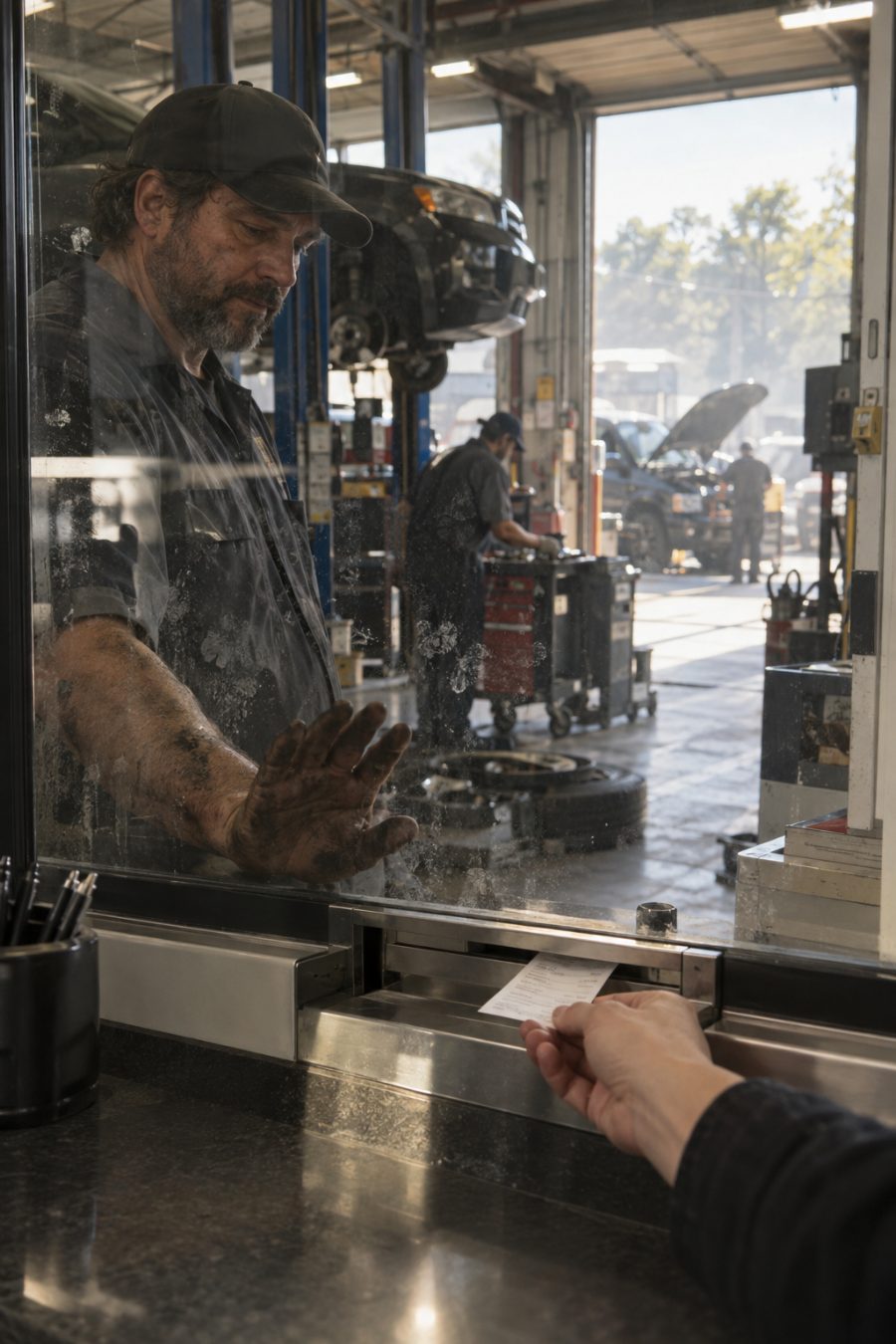
I’m getting my car’s oil changed.
It’s an open space.
Doors wide.
Air moving.
And still—the fumes.
I feel them before I think them.
In my nose.
In my chest.
No one working here is wearing a mask.
People would say: it’s open air.
As if bodies know the difference.
There are signs about smiling.
About service.
About being friendly.
No signs asking what this work costs.
Not per hour.
Over years.
Oil. Fuel. Solvents. Exhaust.
They don’t disappear.
They settle.
Jobs like this are called “well paid.”
Better than minimum wage.
Sometimes praised as honest work.
But higher pay can be a cover.
A way to compensate without naming the risk.
What if workers could do the math?
Not just wages.
But exposure.
Probability.
The cost of getting sick.
What if “good pay” included the chance of losing your health?
Dangerous work doesn’t always look dramatic.
Sometimes it looks clean.
Efficient.
Friendly.
And it smells like oil.
The cost is real.
It just isn’t on the receipt.