Break The Chairs
we stood in a yard swinging hammers at perfectly good chairs so they could be “recycled.” the chairs weren’t the only thing splintering.
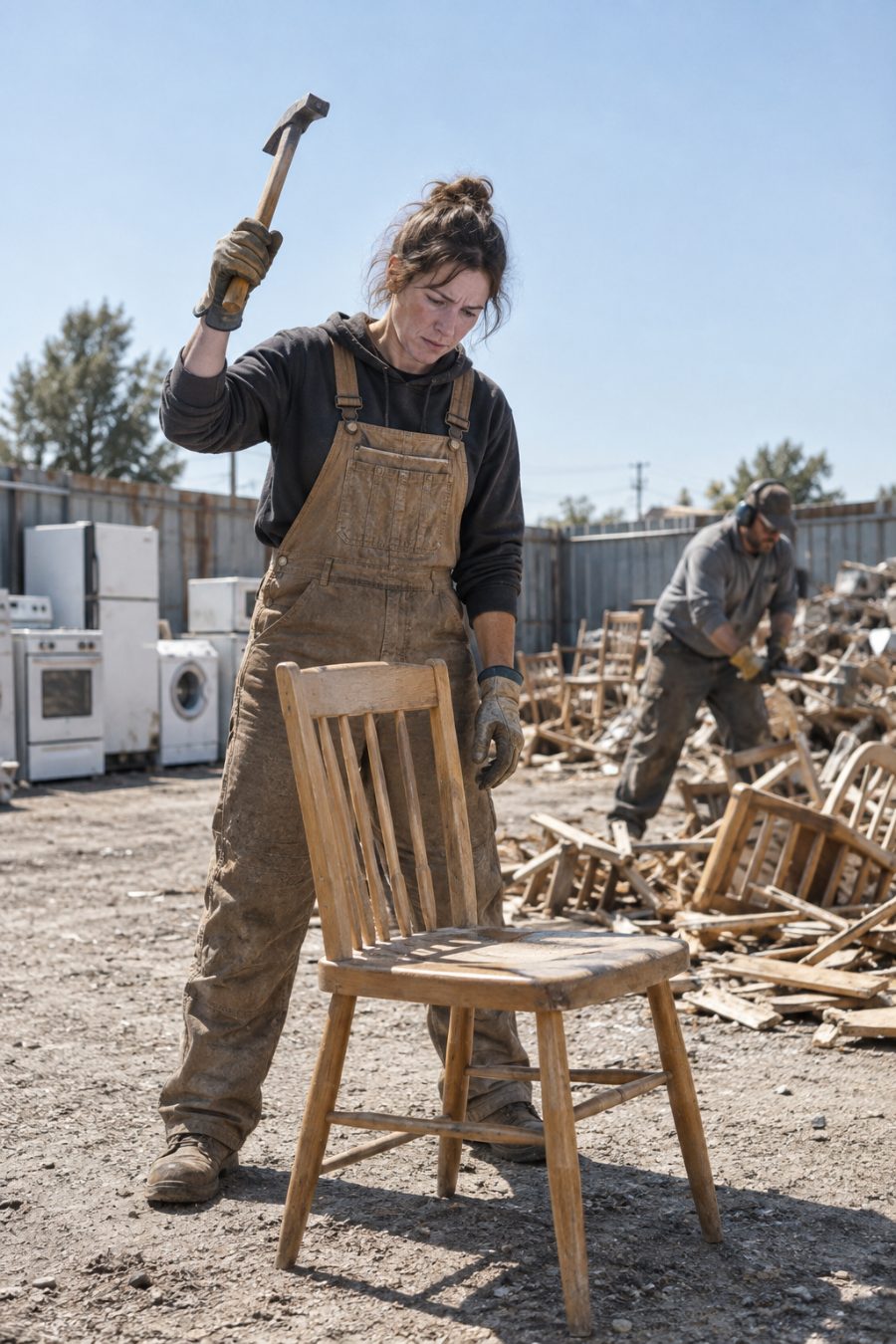
In my climate-action work, one of the most defining days wasn’t a workshop, a training, or a field assignment. It was the day we were told to break chairs.
Not metaphorically. Literally.
A handful of us stood in a yard where unwanted objects seem to gather every year, an archaeological dig of modern abundance.
Rows of perfectly good chairs. Solid. Usable. Needed somewhere. Chairs that could have supported a family kitchen, a community center, a struggling café, a first-gen student furnishing their apartment on a tight budget.
But instead, our task was simple: break them so they could be “recycled.”
Around us sat old vacuums, untouched toasters, waffle makers, blow dryers — the forgotten artifacts of quick purchases and quick goodbyes. Objects barely used. Objects someone once wanted. Objects no one took responsibility for.
And I realized: no one teaches us what happens to the things we discard. No one teaches a class on waste. No one teaches the emotional and ecological cost of accumulation. No one teaches what responsibility actually looks like in a material world.
So there we were, climate workers — some earning barely enough, all trying to make a difference — swinging hammers at chairs that refused to break cleanly.
Wood splintered. Metal bent. Nails resisted.
What resisted even more was the question forming quietly inside us: why?
Why were we breaking what could be reused? Why not redirect these items to communities who need them? Why not partner with nonprofits? Why not create a reuse hub, a repair station, a campus thrift ecosystem? Why hasn’t anyone here asked this in ten years?
Why is our labor designed to break objects instead of breaking the systems that create this waste?
We weren’t just breaking chairs. Something in us was being broken too: our imagination. Our sense of possibility. Our instinct to ask better questions.
I saw the shadow side of climate work that day — not the passion, not the purpose, but the quiet compliance we are conditioned into. How easily we normalize what doesn’t make sense. How quickly we accept tasks that contradict the very values that brought us here.
Some days, the chairs weren’t the only things splintering. My colleagues and I were too.