Nepal.
Nepal
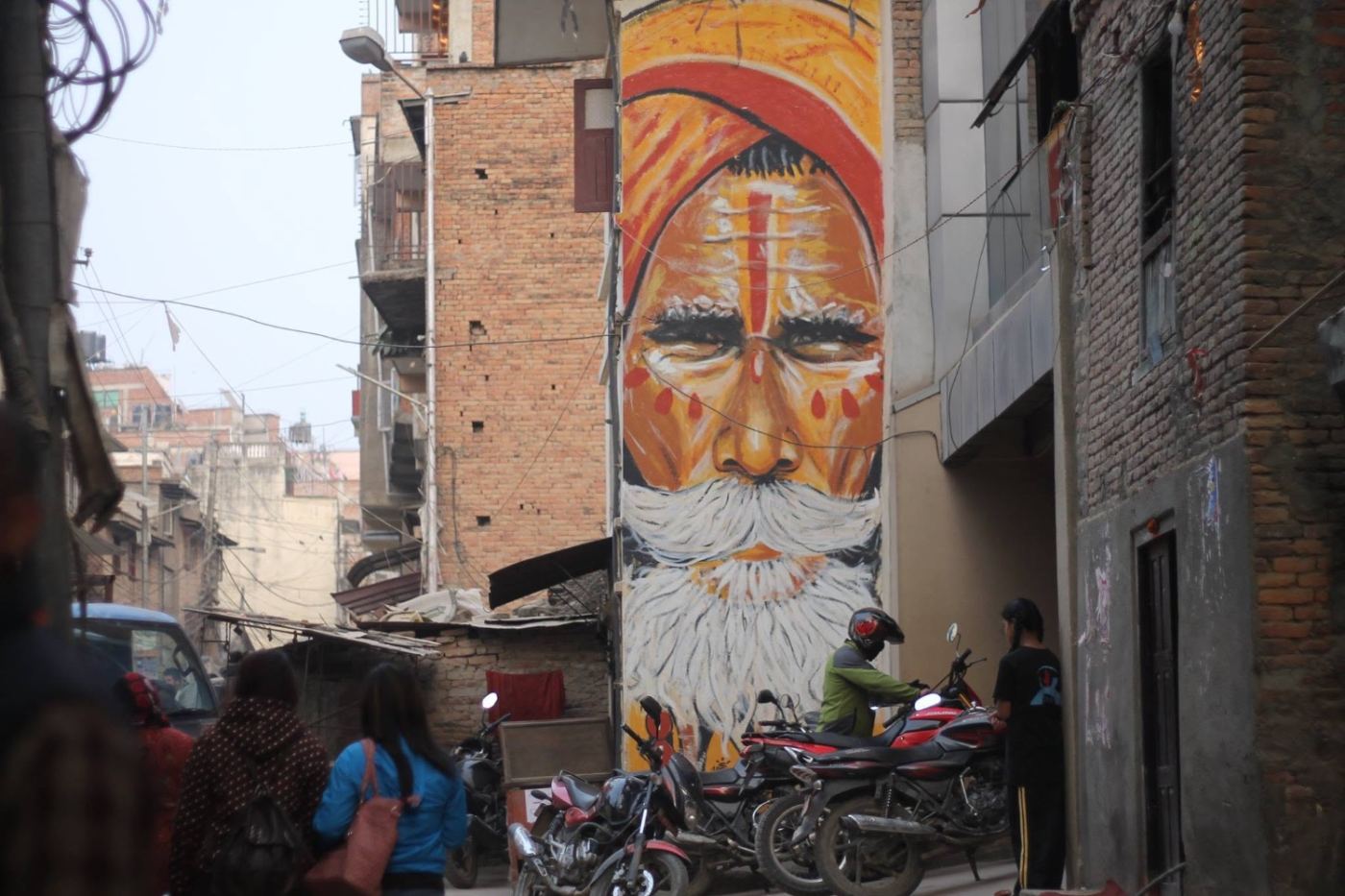
i went for a festival of women and stayed for the sadhus. a sadhu performs his own funeral before he becomes one — the death rites for himself, said in his own mouth, so the caste dissolves and the name goes with it. after that there is no family, no property, no future tense.
the ash on the skin is vibhuti — ideally lifted from a cremation fire, because ash is what everything becomes and he has decided to wear the ending on purpose. three horizontal lines for shiva. the beads are rudraksha, said to be shiva’s tears. the hair is never cut, because cutting it would be grooming and grooming is vanity. they live at pashupatinath beside the burning ghats on the bagmati, where the bodies go all day, so that they never get to forget what they already agreed to.
and then a tourist pays five hundred rupees to photograph the man who killed his own ego. i paid. i’m not standing outside that transaction — i’m inside it, holding the camera
The Festival & The City
The Ones Who Attend
Their Own Funeral.
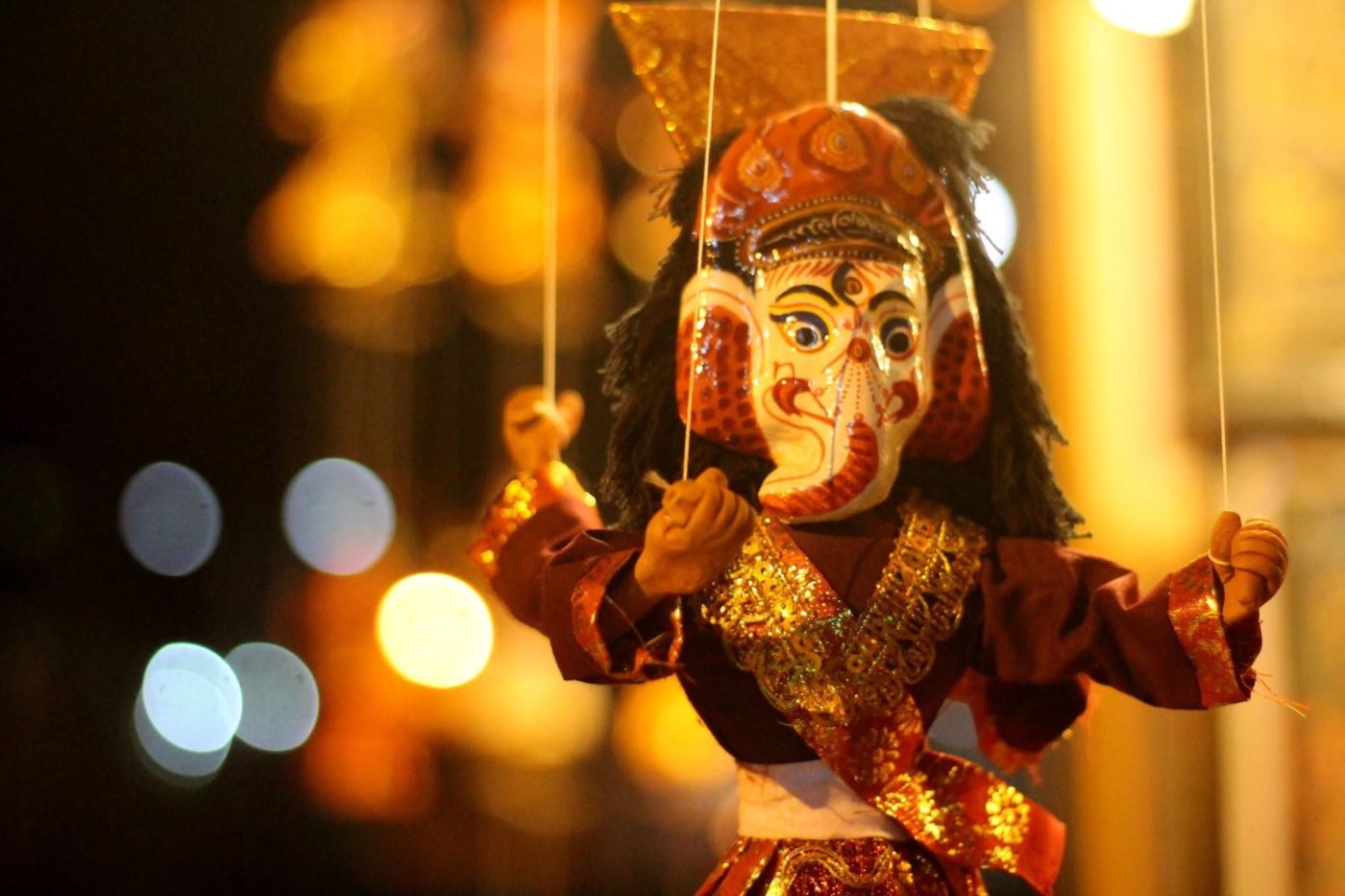
Shivaratri, 2017. The Dutch documentary crew was turned away at the gate of the fifth-century temple; my brown skin walked me straight in. My guide, Ganesh, narrated the morning like a wikipedia entry written by a drunk frat boy — corpse-brides, miracle oils, a marriage I had allegedly entered by accepting a blessing. So this piece is the opposite of Ganesh: every caption below survived a fact-check.
On the Bagmati ghats, four pyres burned in a row. Three hours to burn a body. No wailing, no black — mourning wears white here, and the river carries the ash toward the Ganga. What stayed with me wasn’t the burning. It was learning who doesn’t burn.
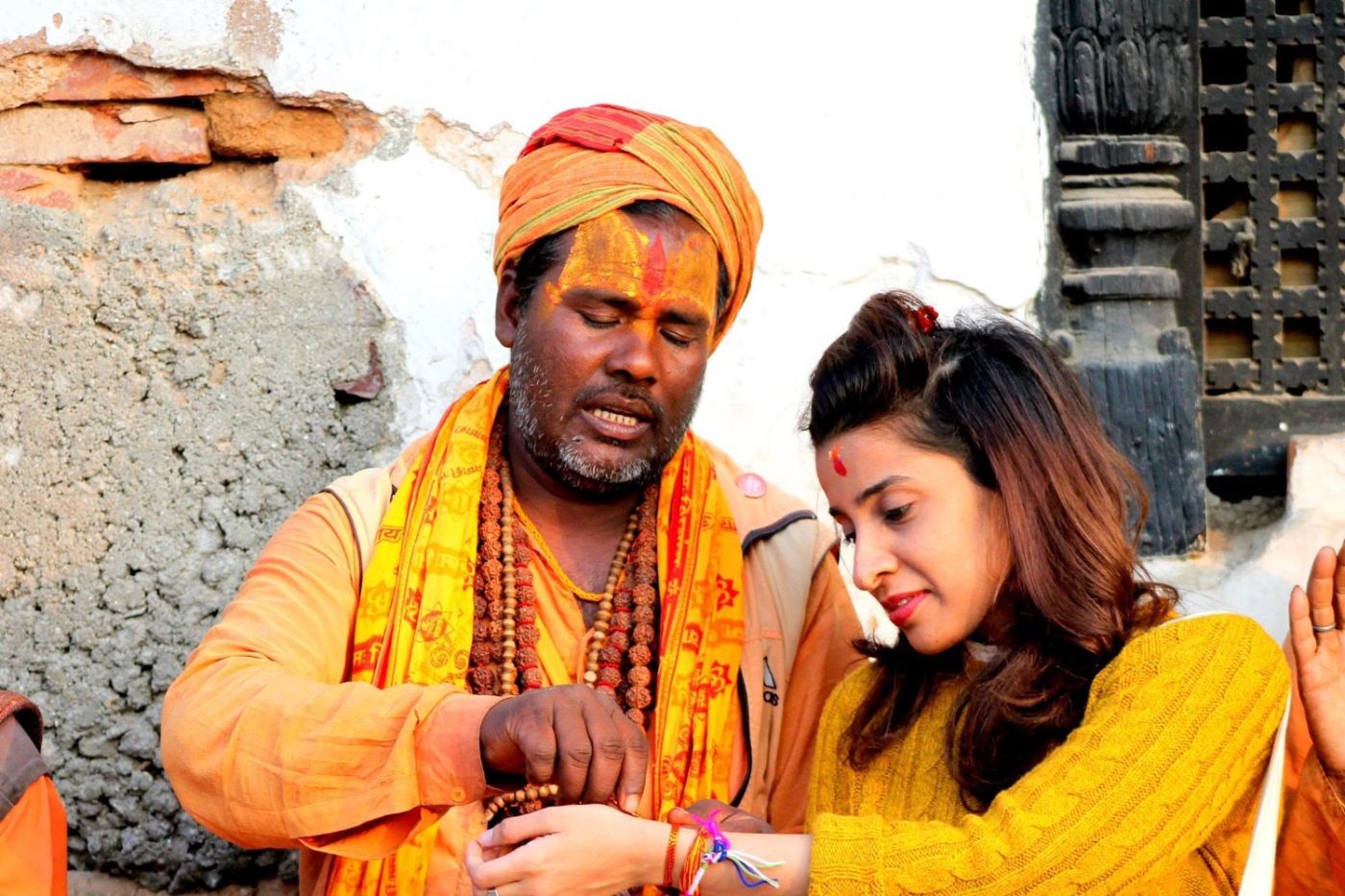
a sadhu tied this on without asking my religion. rakshasutra, for protection — i didn’t ask for the blessing and needed it anyway.
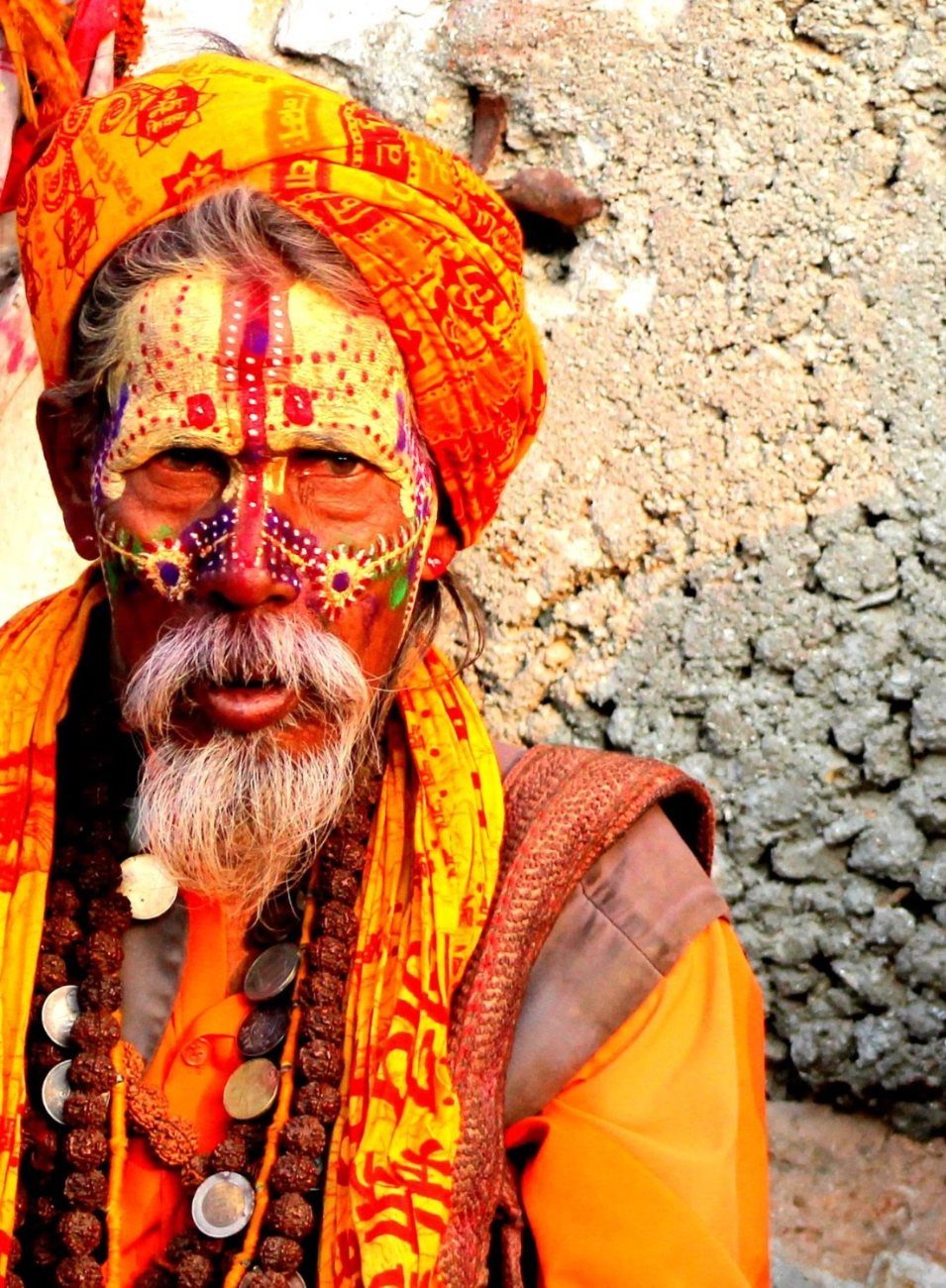
the face repainted daily, the coins and rudraksha layered on top — a man dressed as his own devotional object.
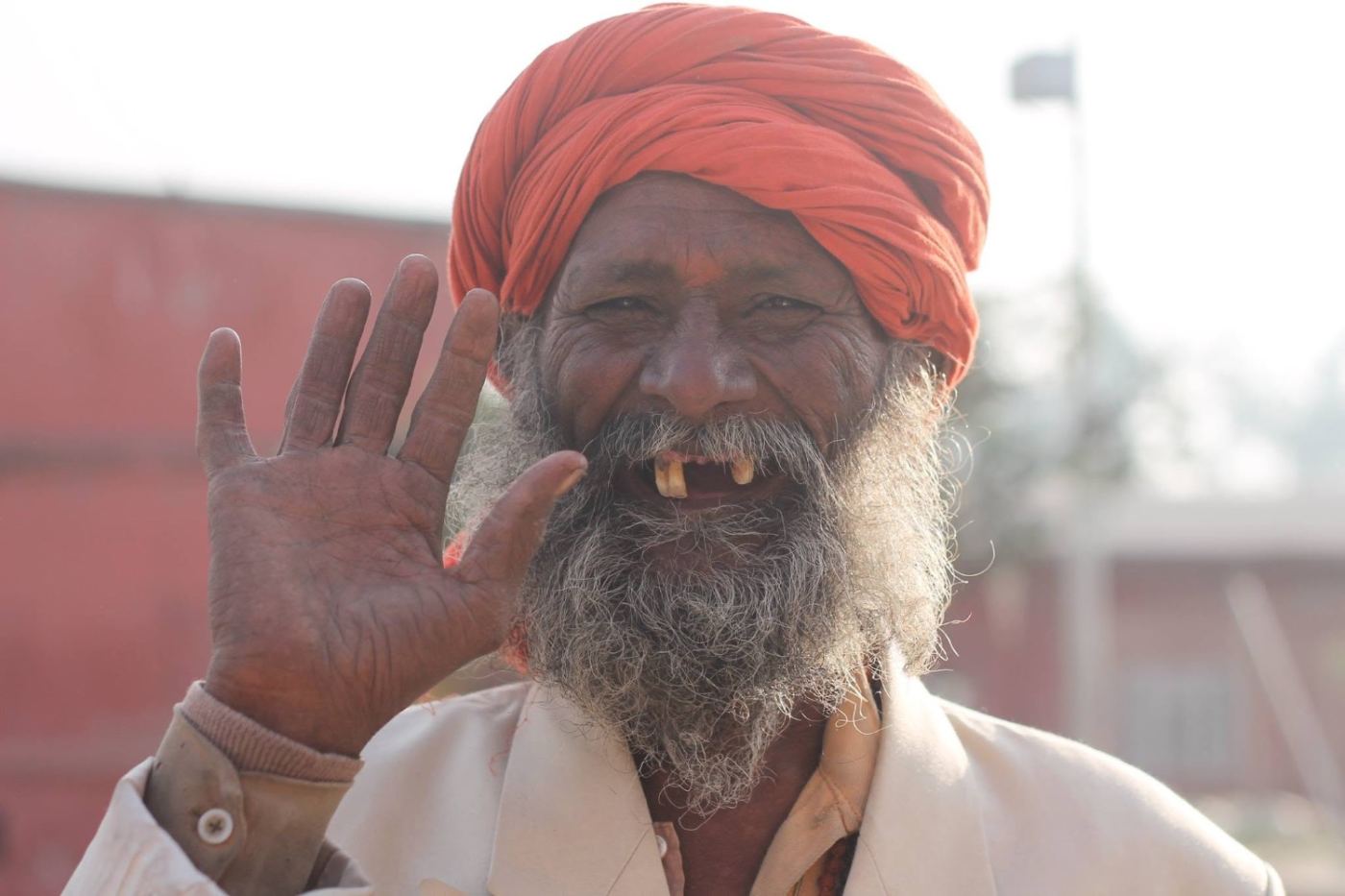
a wave, a grin, a pose held for the lens — the sacred and the transactional occupy the same face without contradiction.
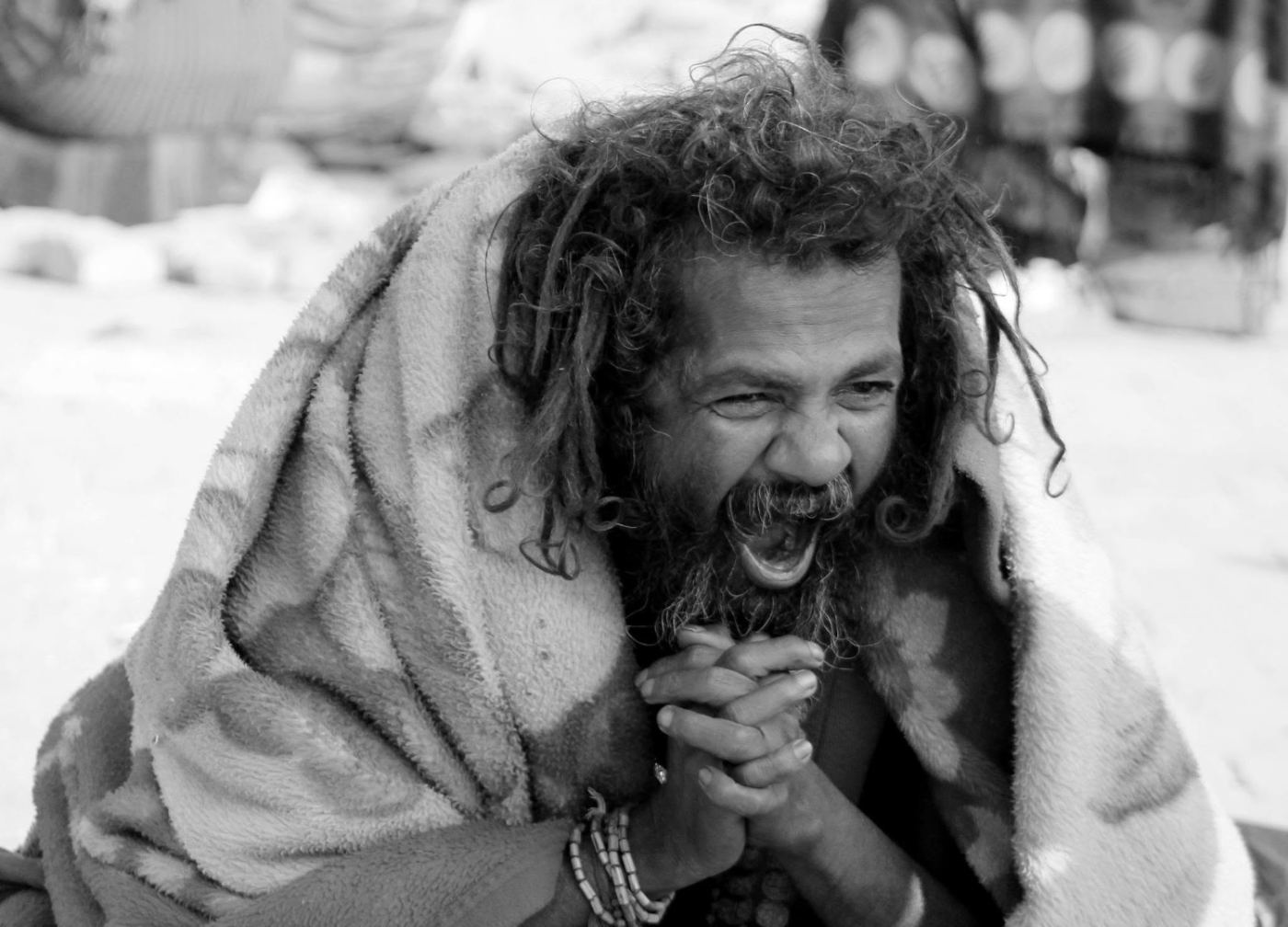
shivaratri mornings are cold at altitude; the blanket is practical, the laugh is at my question. black and white so nothing else competed.
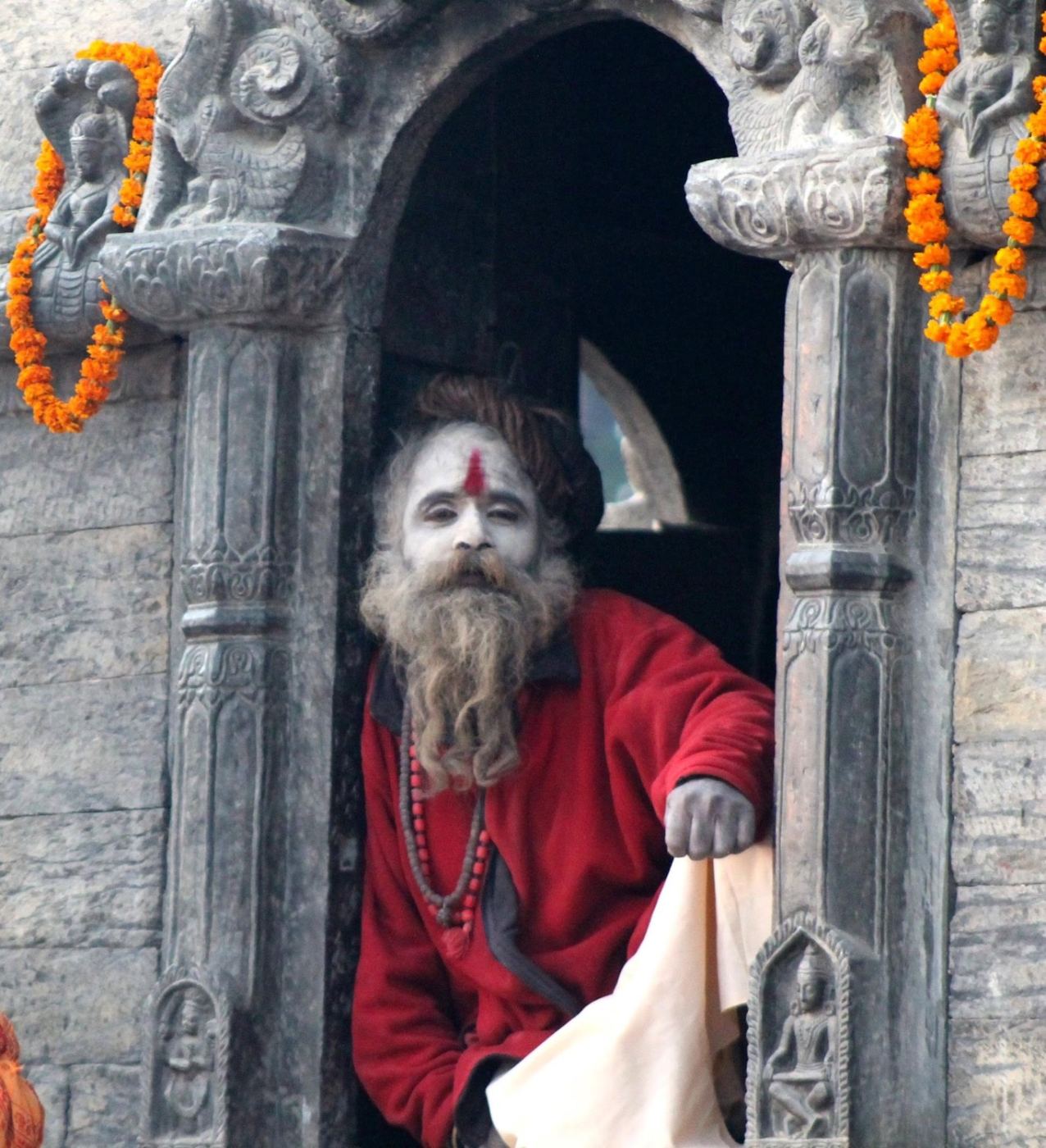
another shrine, another sadhu keeping it — red robe over white ash, marigolds strung for the gods rather than for him.
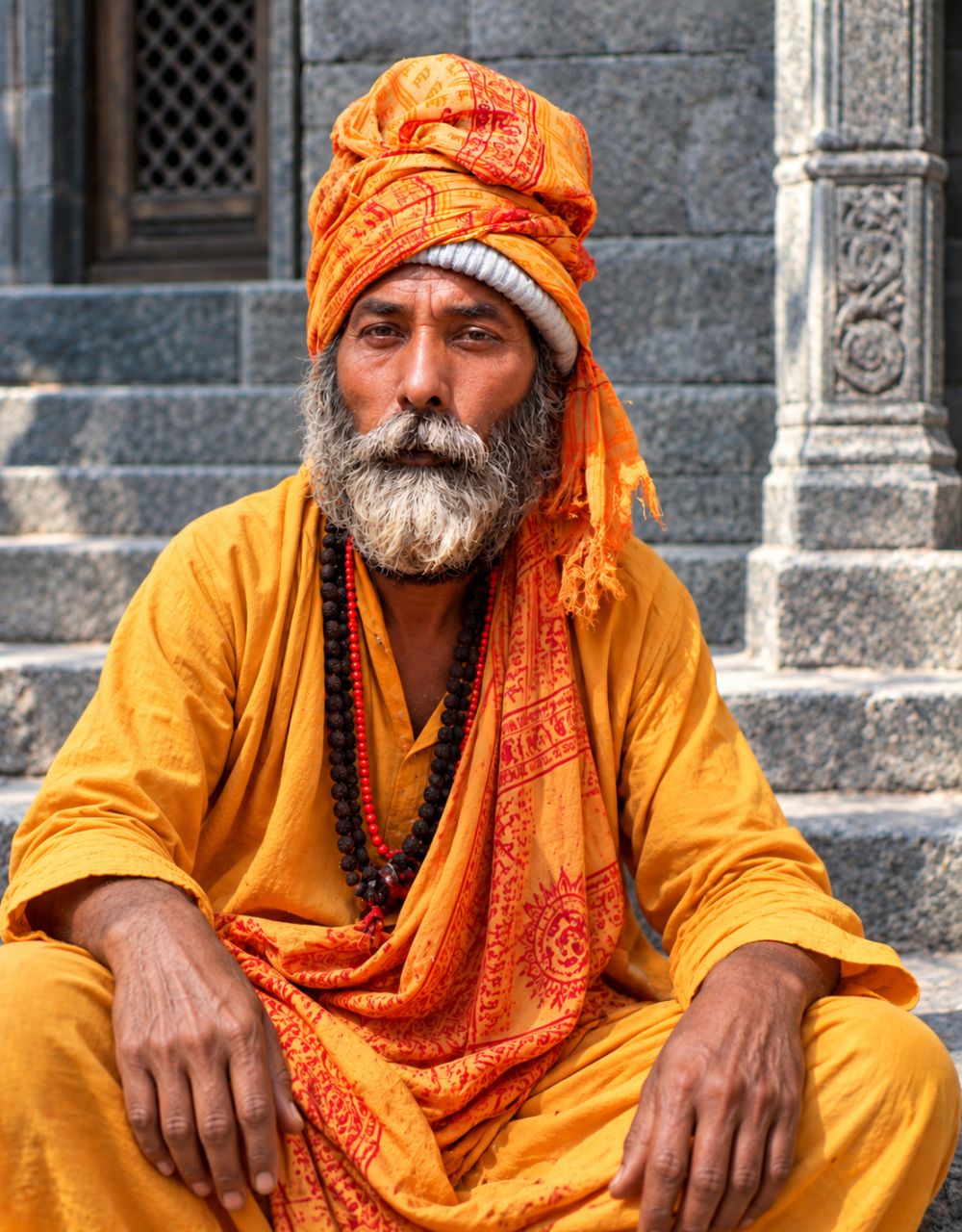
saffron is fire, worn as clothing. a sadhu takes it after performing his own funeral rites at initiation — he attends his own shraddha, gives up his name, and the man who walks away is already cremated. everything after is afterlife.
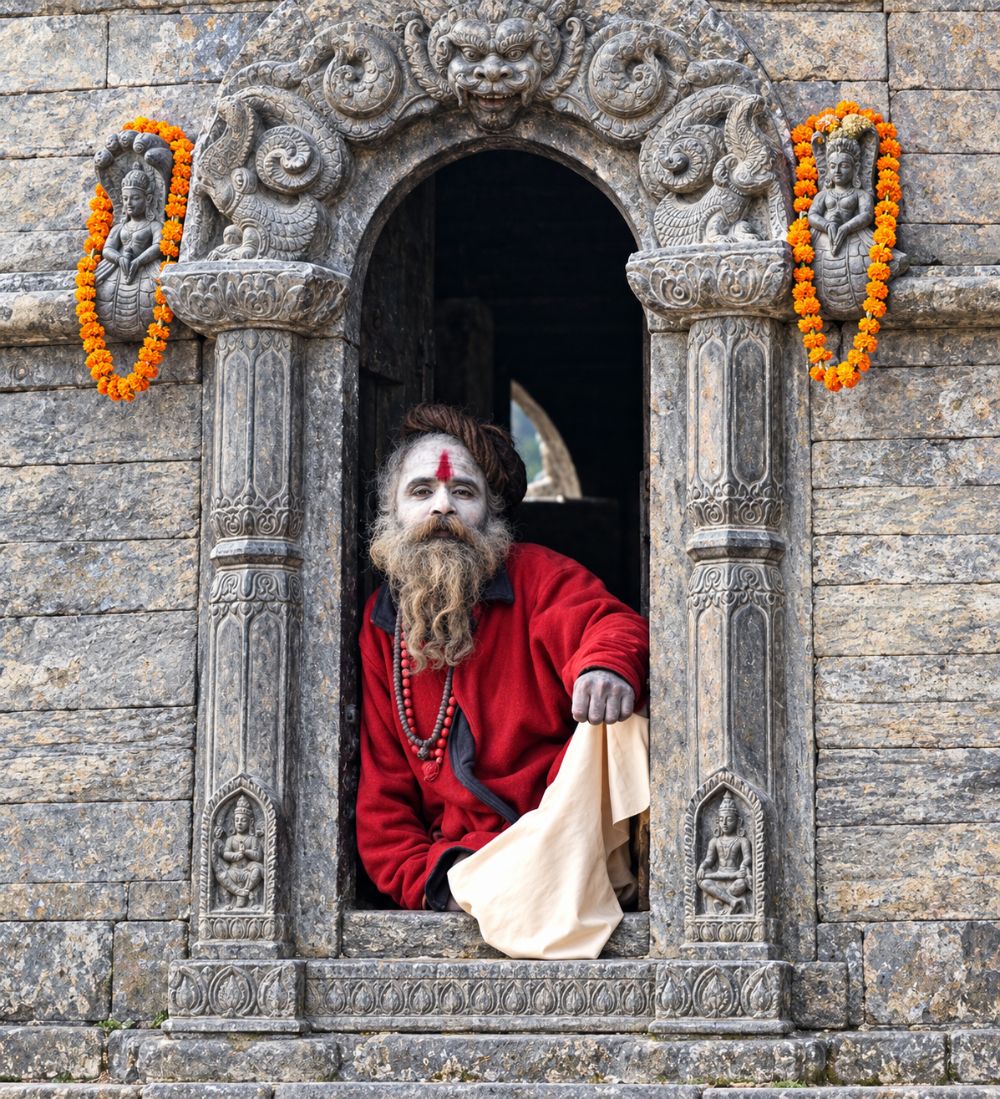
vibhuti — ash, often from the cremation ghats — worn face to body. ash is the one substance fire cannot take twice; wearing it is wearing the ending in advance. he keeps a votive shrine built for the dead. the marigolds are for the gods.
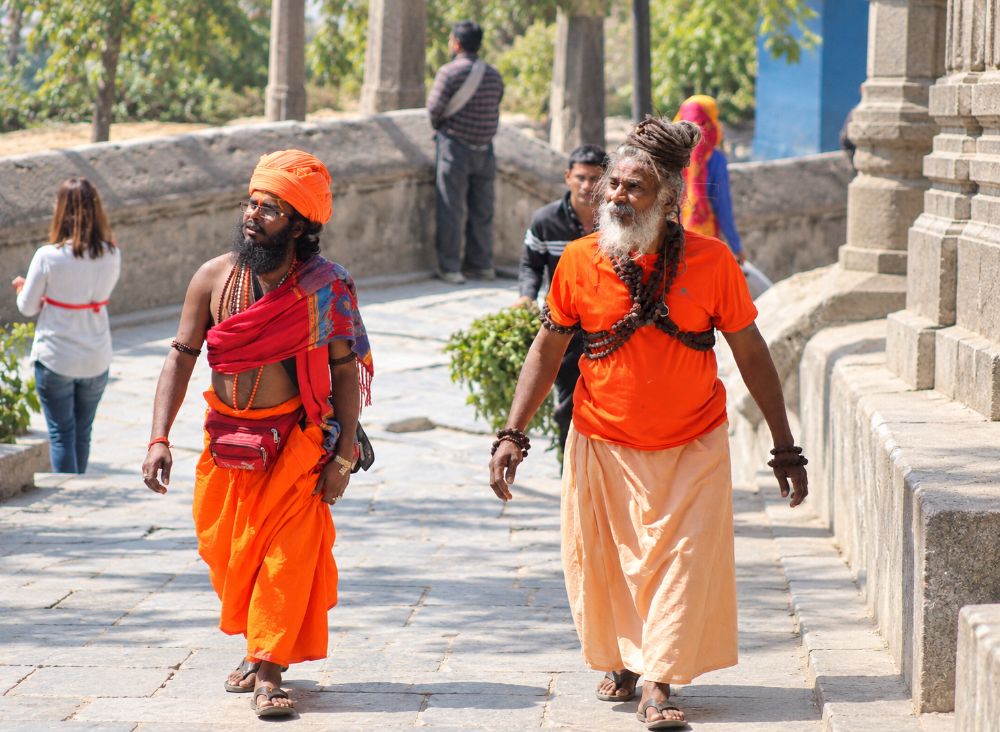
sadhus belong to akharas — monastic orders, some a thousand years old, organised like regiments. the forehead mark is the uniform: horizontal lines for shiva’s men, a vertical flame for vishnu’s. you can read a stranger’s whole theology from ten feet.
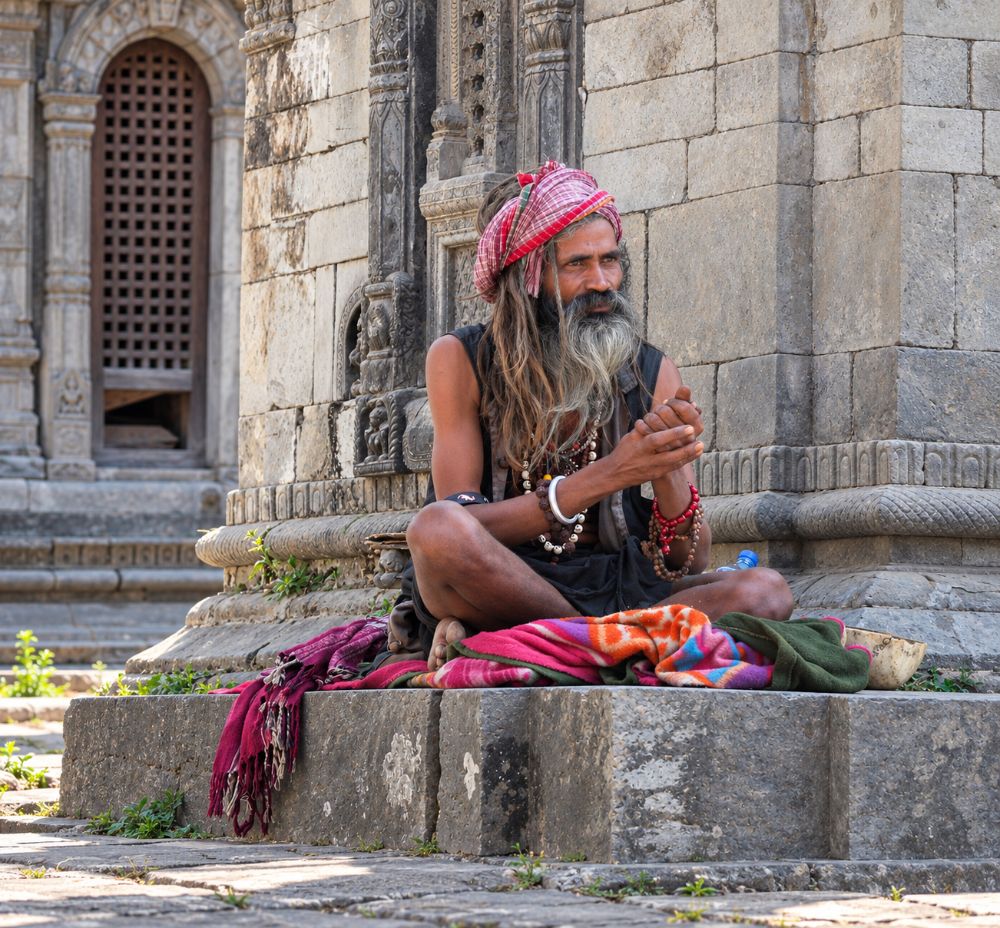
rudraksha — “rudra’s tears,” seeds of a blue-fruited himalayan tree — strung in one hundred and eight. the mantra is counted with the thumb across the segments, never the index finger. the index is the ego. it doesn’t get to keep score.
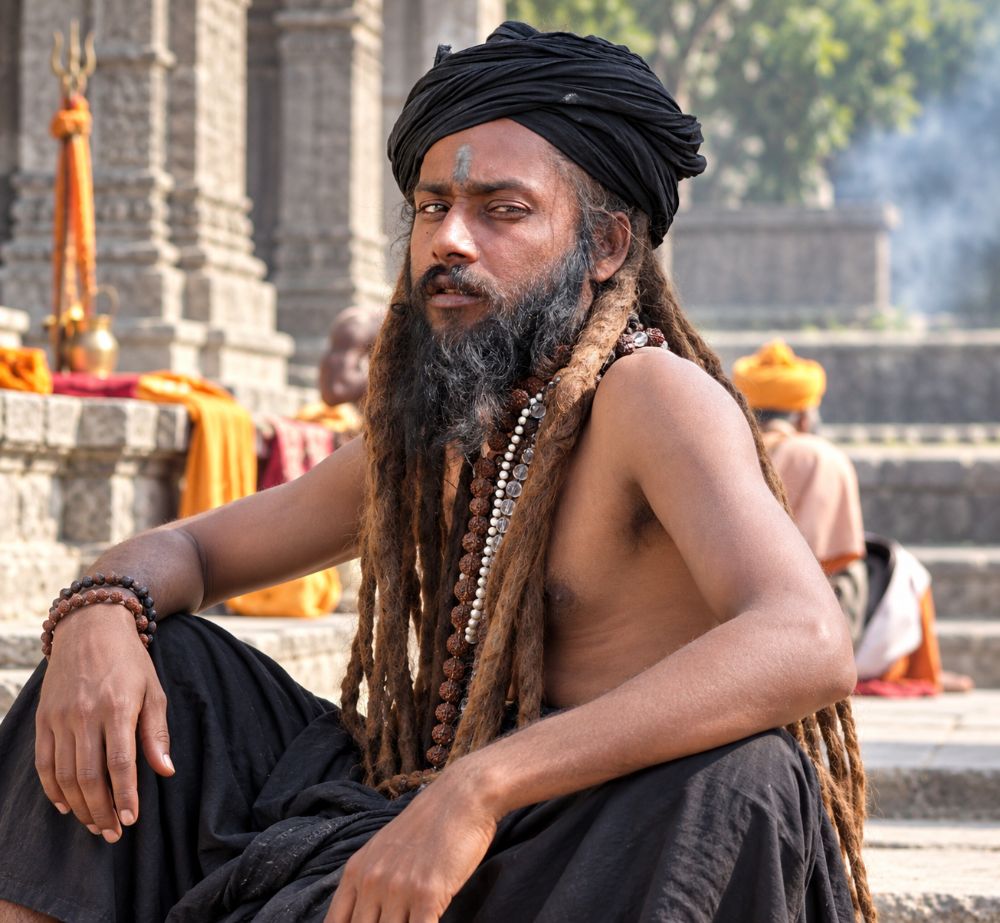
the black-clad orders practise where everyone else refuses to: the cremation ground. the rumours about them — corpses, cannibalism — travel further than the documented practice, which is harder to sensationalise: sitting all night beside the burning dead until fear runs out of things to say.
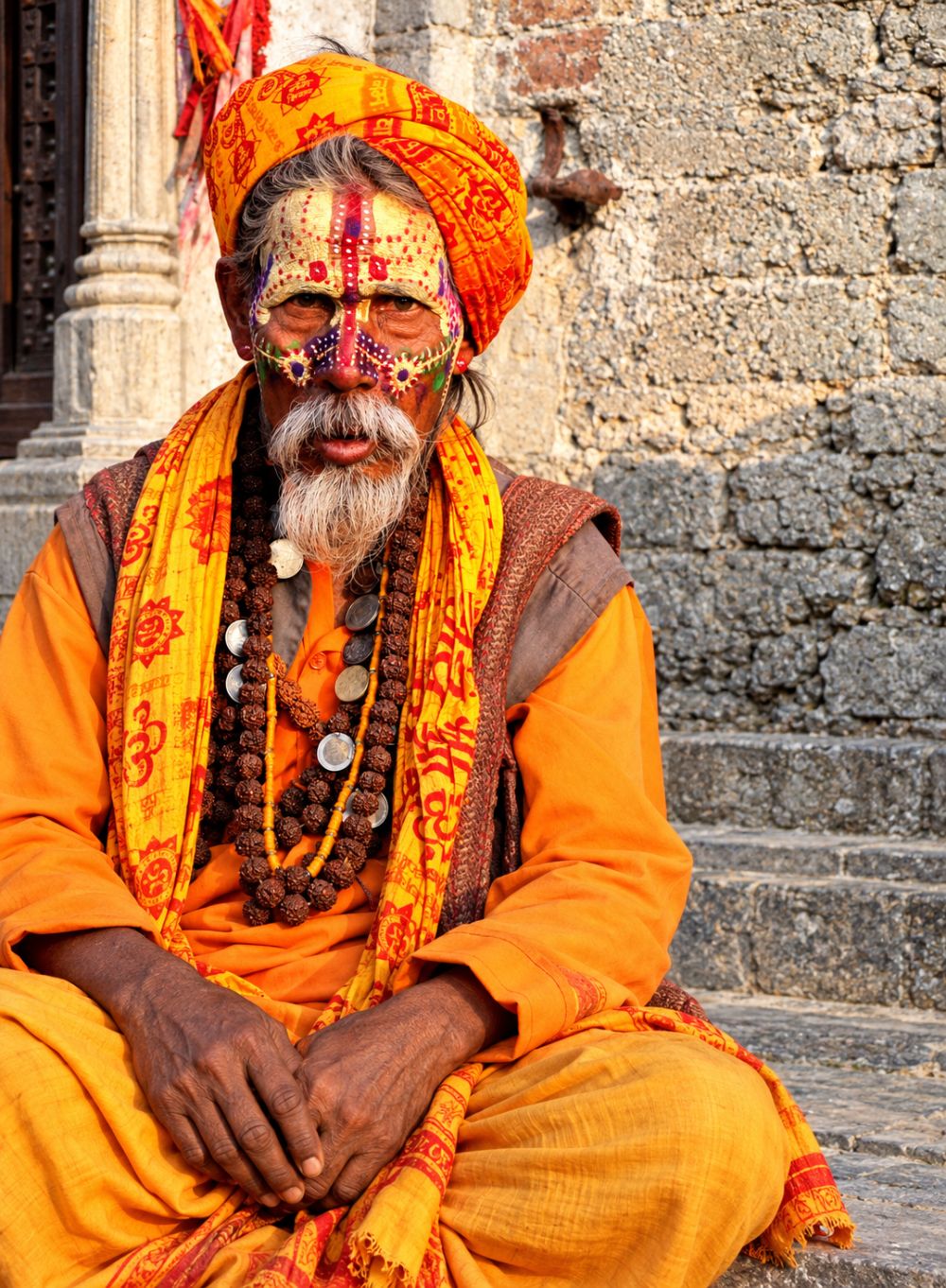
he owns nothing, and wears a ledger: coins threaded through the rudraksha, each one somebody’s offering. pilgrims give to be blessed, tourists give to photograph, and the line between the two is thinner than either side admits.
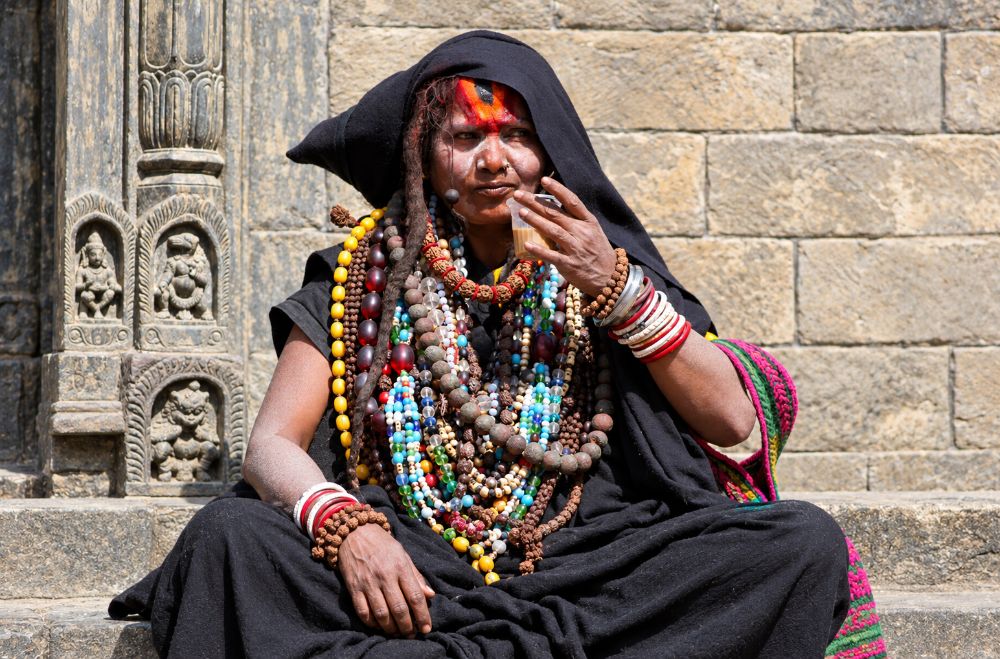
yes — there are holy women. sadhvis, perhaps one in ten. many take renunciation after widowhood, or after a marriage they walked out of: the one respectable exit from a life somebody else wrote. she drank her chai like a verdict.
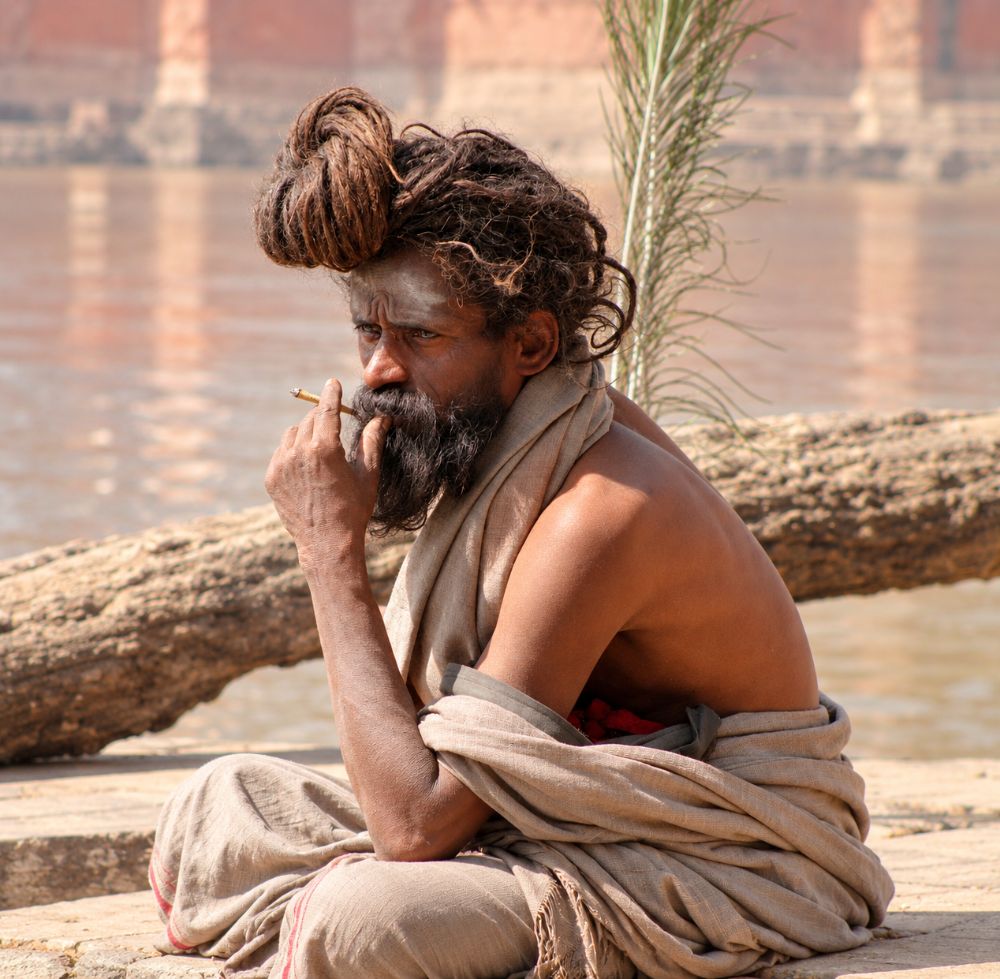
charas — shiva’s herb, technically illegal, ritually tolerated, fully sanctioned one night a year at shivaratri. the chillum circles the way the stories do. below him, the river carries the morning’s ashes toward the ganga.
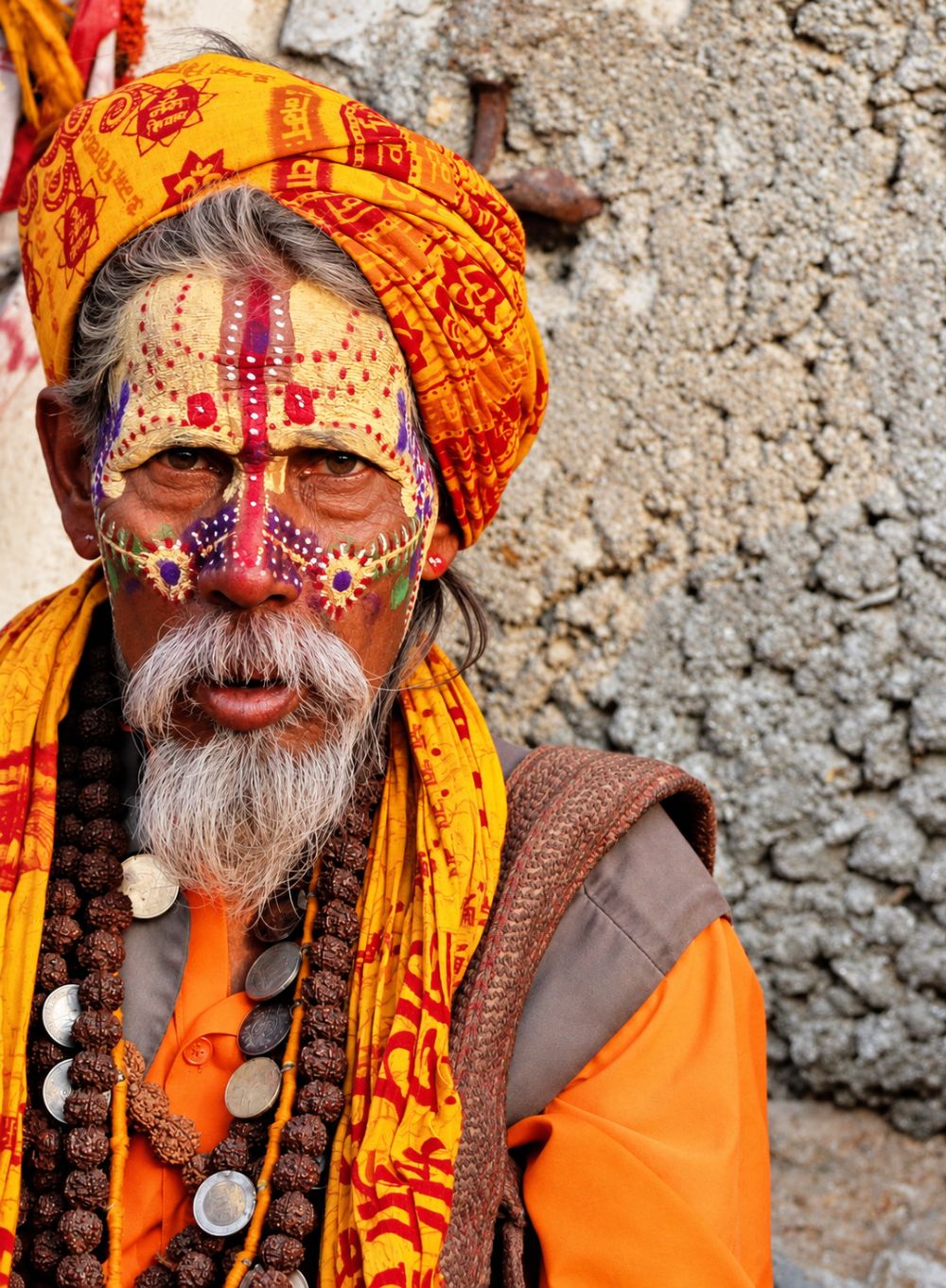
painted fresh every morning; washed off every night. the discipline is not the pattern, it is the repetition — impermanence, rehearsed daily on one’s own face until the face stops being yours.
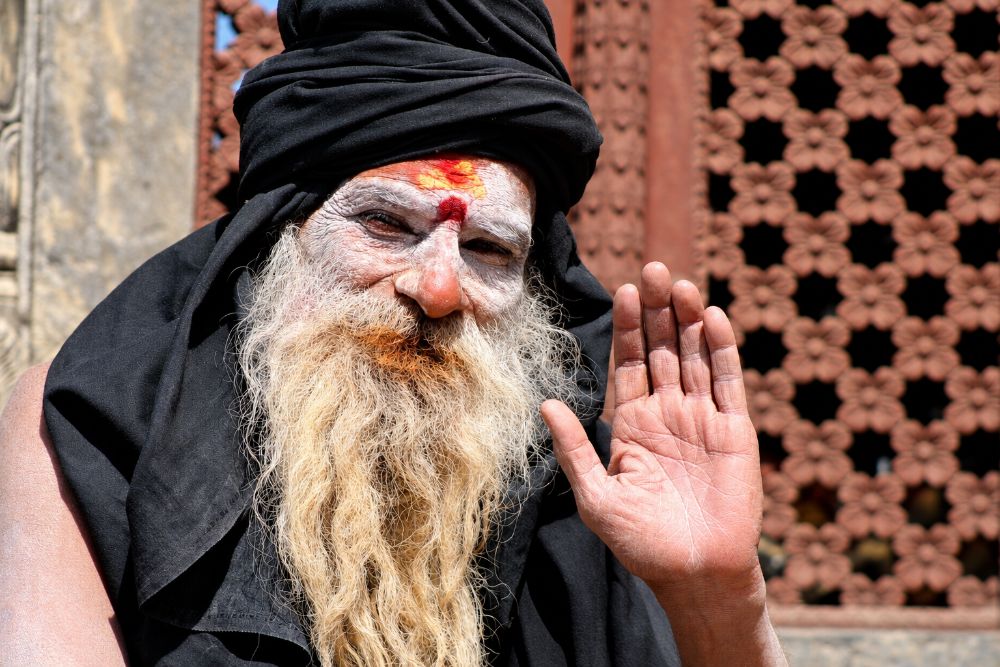
the raised palm is abhaya mudra: fear not. at the gate, a sadhu pressed a blessing onto my muslim forehead without one question about my god. the dutch film crew was still outside, arguing with security.
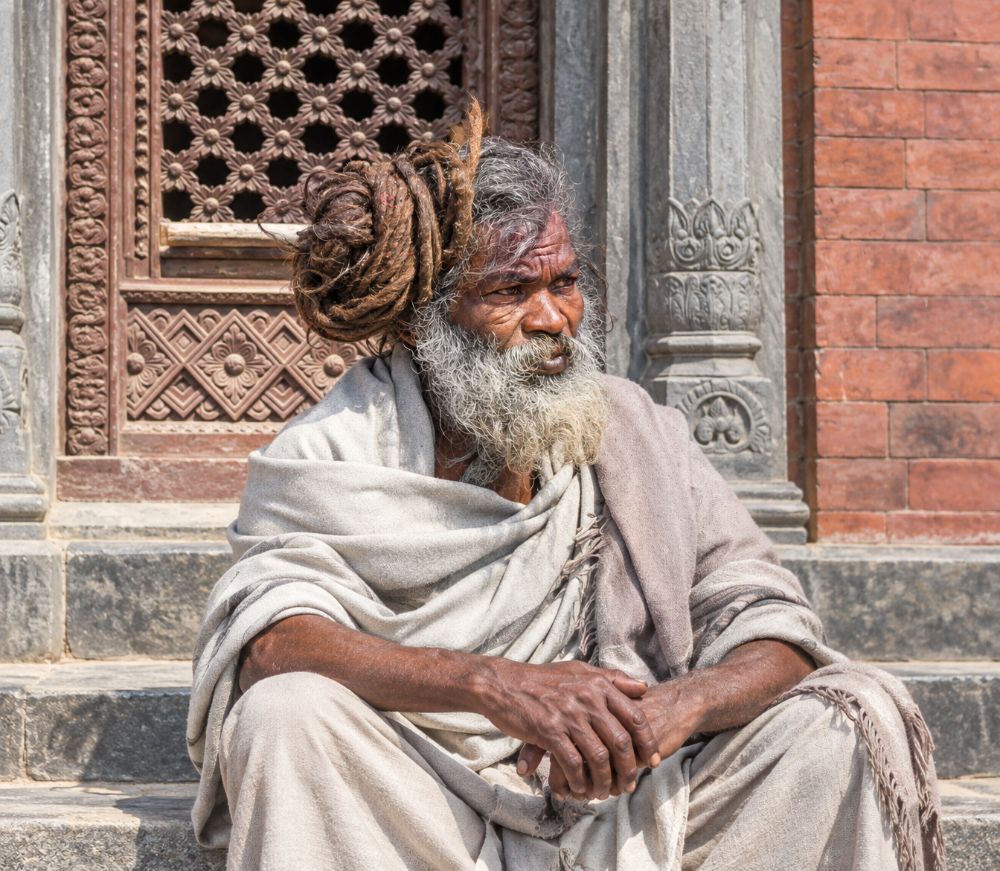
the fact that reorganised my whole morning: sadhus are not cremated. cremation is for householders — the fire takes what they could not let go of. a sadhu let go at initiation, so there is nothing left to burn. he is buried seated, in meditation, facing north. the fire is dismissed.